Innovative bio-based insulation products
Text Roel van GilsImage SOPREMA
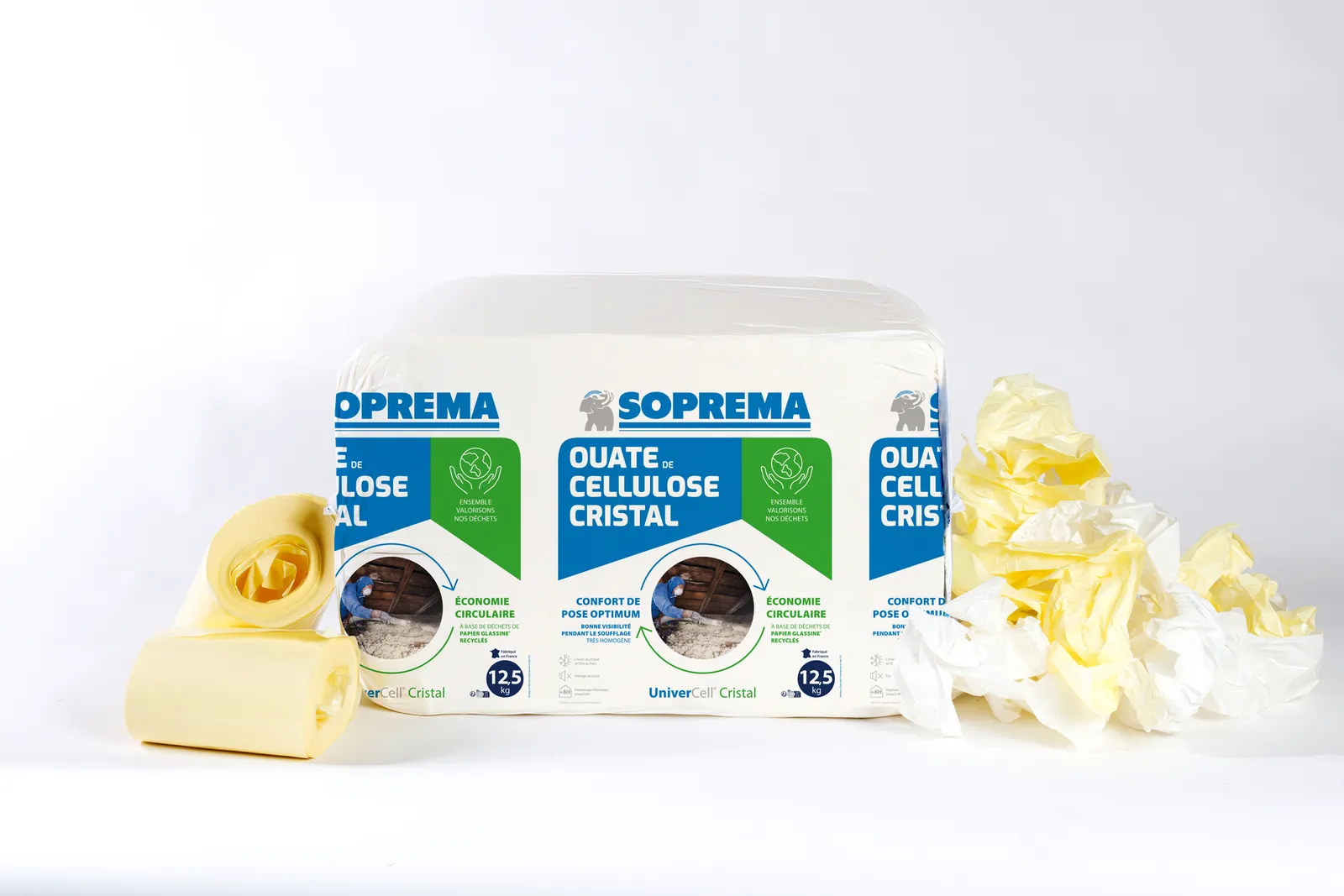
Made from release liners and moisture-resistant wood fibres
SOPREMA has added two new bio-based insulation products to its already extensive bio-based range: Univercell Cristal, an innovative blown-in cellulose insulation made from recycled glassine paper (collected release liners from stickers), and Pavaclad, moisture-resistant wood fibre insulation for traditional cavity walls. These new products also provide solutions for applications where bio-based insulation has so far been less common.
The new blown-in insulation material, Univercell Cristal, is made from glassine paper, the silicone-coated release liners used as the backing for labels and stickers. “More than 500,000 tonnes of this material are generated in Europe each year, yet less than ten per cent is currently recycled,” says Jacco Dwars of SOPREMA. “Because of the silicone coating and the high, virgin quality of the paper, there has so far been hardly any viable use for this material.”
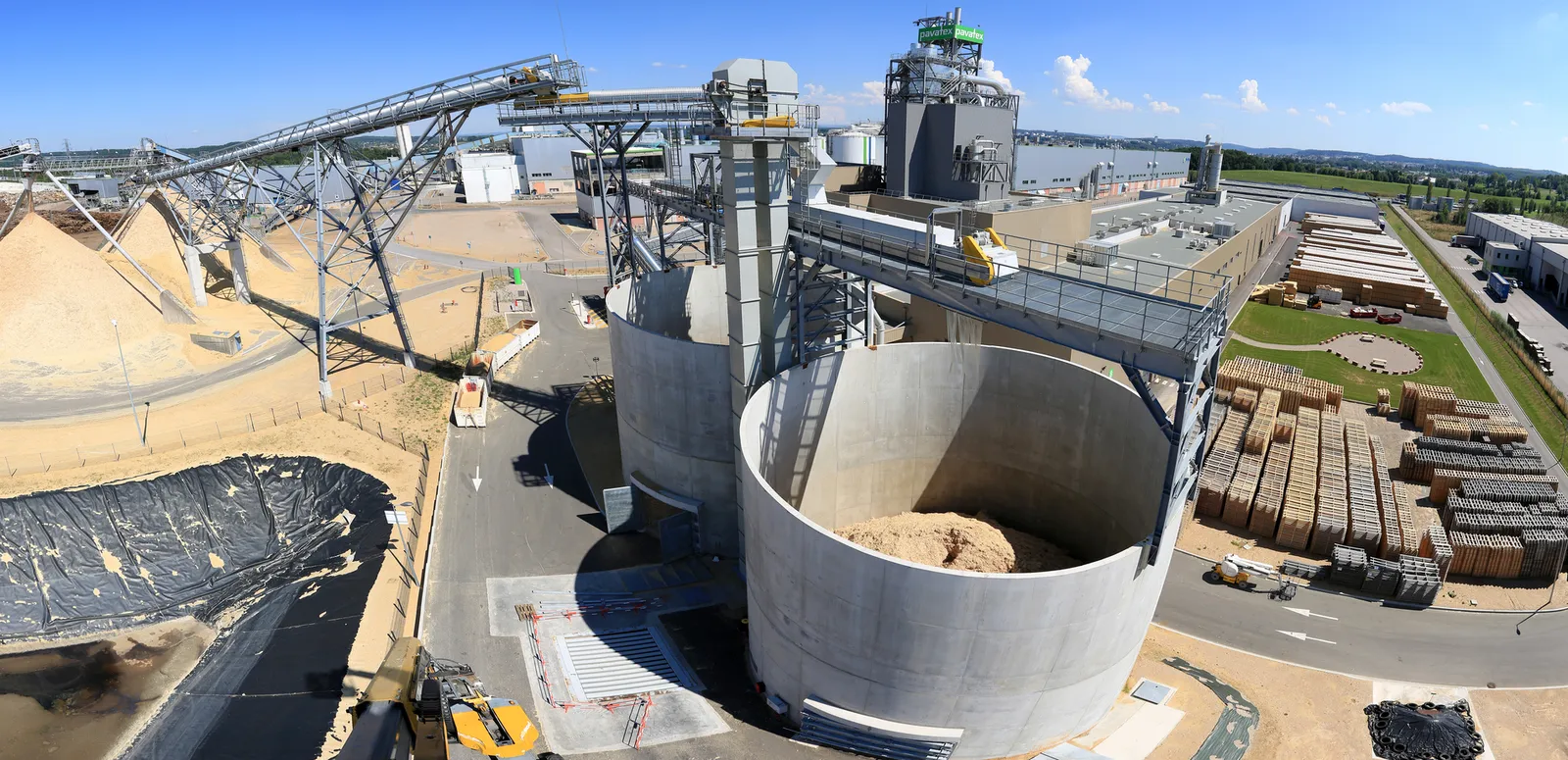
New factory
At a new factory in Beaune, France, SOPREMA processes these release liners into high-quality cellulose insulation. “The material is collected, shredded and combined with a proportion of standard paper, then packaged in bales ready for use in blowing machines,” explains Dwars. “This creates a circular solution for a waste stream that was previously largely incinerated or sent to landfill.”
Less material used
Univercell Cristal stands apart from traditional cellulose insulation because of the high quality of its raw material. “This means it can be blown in at a lower density while delivering better insulation performance,” says Dwars. “Standard cellulose is typically blown in at a density of 50 to 60 kg/m³. Univercell Cristal achieves a lambda value of 0.040 W/mK at a density of 45 to 55 kg/m³. This means less material is used, fewer transport movements and lower installation costs.”
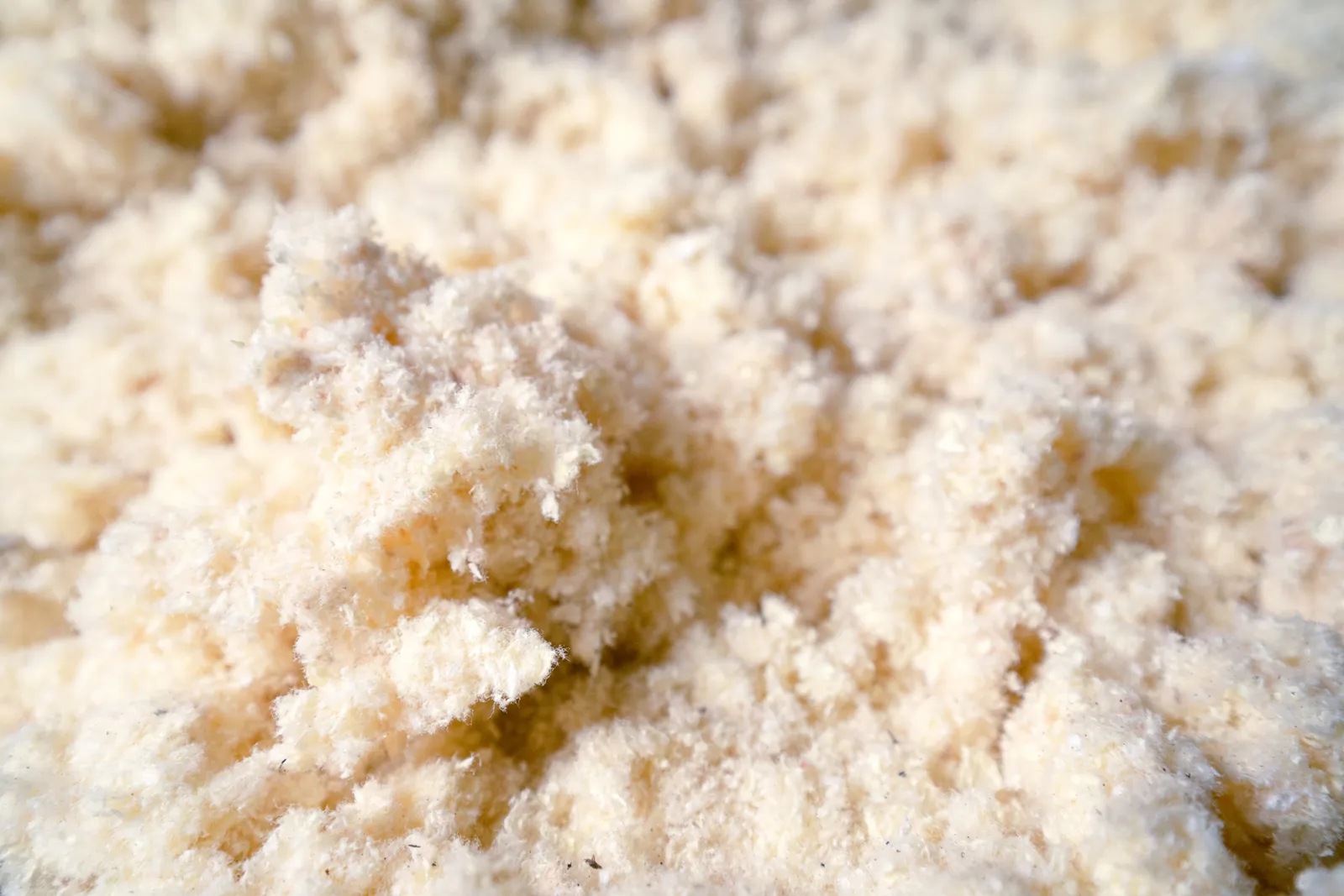
Dust-free
The product also offers an important practical benefit for installers. “The material is virtually dust-free. Traditional blown-in cellulose insulation often generates a lot of dust, but thanks to the properties of the glassine paper and its silicone coating, this is barely an issue with Univercell Cristal,” says Dwars. The material is suitable for façades, internal walls and other vertical applications where blown-in insulation is used.
A solution for traditional cavity walls
Another new product from SOPREMA is Pavaclad. “It is moisture-resistant wood fibre insulation for traditional cavity walls. Until now, wood fibre insulation has mainly been used in timber-frame construction, with flexible batts between the studs and rigid boards on the outside. However, the market has increasingly called for a bio-based alternative for traditional cavity walls, which are normally filled with mineral wool or PIR boards. Pavaclad has been specifically developed for this application. The product combines the benefits of wood fibre with high moisture resistance.”
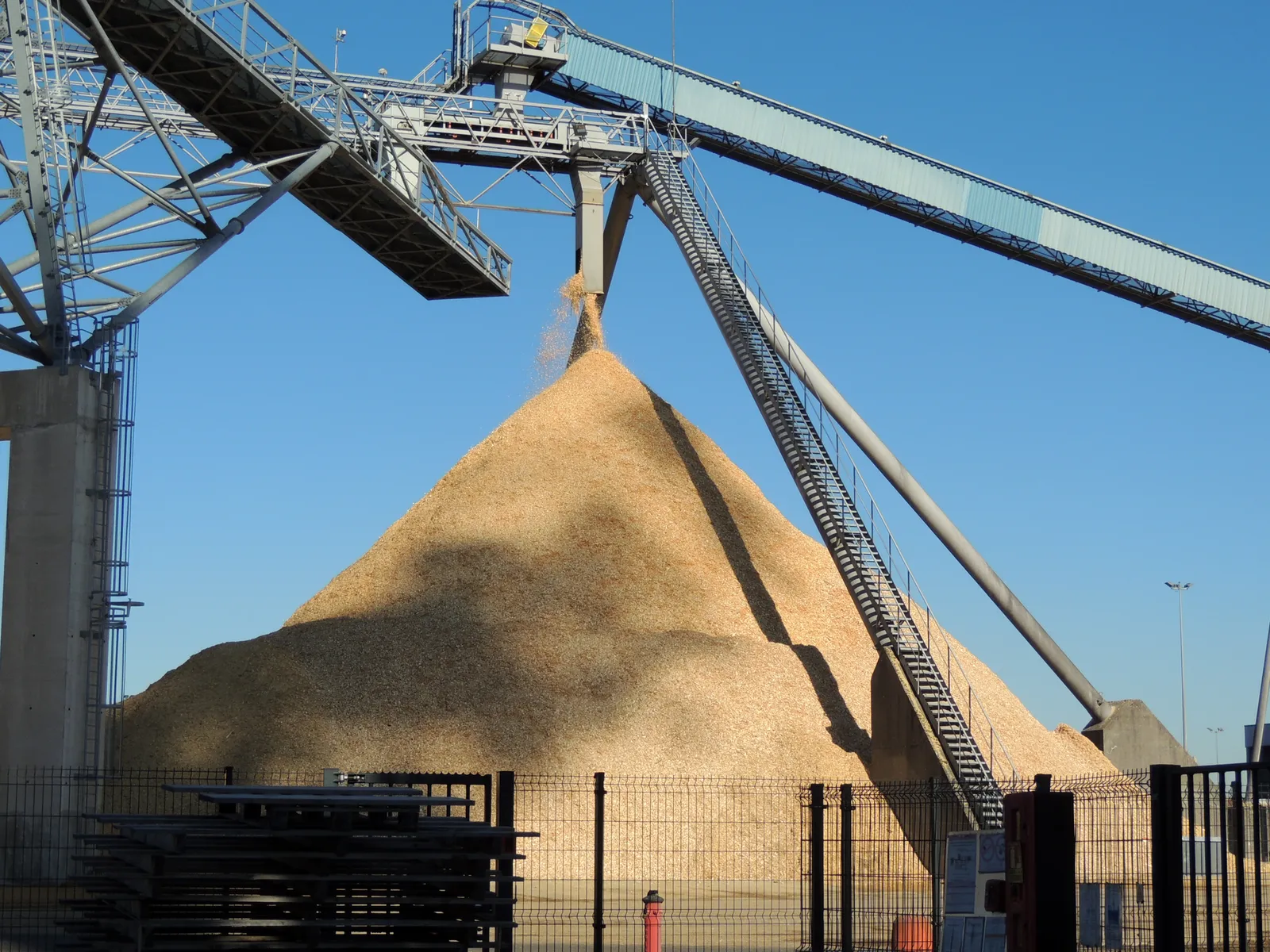
Strong insulation performance
In a traditional cavity wall, rain can effectively blow into the cavity when the wind is in the right direction, says Dwars. “For a long time, this posed a risk for bio-based materials, as they do not tolerate moisture well. A specific treatment makes Pavaclad more resistant to moisture and prevents mould growth. And with a lambda value of 0.036 W/mK, the material also offers very strong insulation performance for a rigid bio-based board. Although a thicker build-up is needed than with PIR, the product is comparable with glass wool and stone wool. This makes it a fully-fledged bio-based alternative for traditional cavity wall insulation.”
With Univercell Cristal and Pavaclad, SOPREMA offers sustainable insulation solutions for both renovation and new-build projects, as well as for applications where bio-based alternatives have previously been scarce.
A business enquiry for SOPREMA? Get in touch
Companies in this story
Keep following this
Get an email when a new story is published. No account needed.
- ThemeAn energy-efficient and comfortable building envelope
- SubjectInsulation
- CompanySOPREMA