Building more sustainably with EPS sandwich panels
Hermes Isolatiepanelen, based in Oosterhout, has specialised in and produced high-quality EPS sandwich panels bearing the CE mark since 1983.
With a polystyrene core, these sandwich panels are exceptionally strong thanks to their excellent structural properties, making them particularly suitable for large spans. Eric Lotterjonk, Sales Manager at Hermes Isolatiesysteembouw, explains: “EPS used to be the go-to building material for insulation and construction, but over time panels with PUR and PIR cores were introduced. Those panels are somewhat more difficult to produce, but the basic raw material is cheaper, and their insulation values and fire resistance are somewhat better than those of EPS. But,” Lotterjonk adds, “the production process for PIR and PUR panels is extremely harmful to the environment.”
Thanks to their excellent structural properties, these sandwich panels are particularly suitable for large spans, as in this potato storage facility.
Recyclability
Hermes considers it absolutely essential to take this into account too. “Not only are the chemical fumes released during production harmful to the environment, but PIR and PUR panels also pose a challenge when the product has to be processed during demolition. Recovering the raw materials is a difficult, costly and complicated process, which means recyclability is very low. The EPS panels we make are 100% recyclable, both the steel sheet and the EPS itself.”
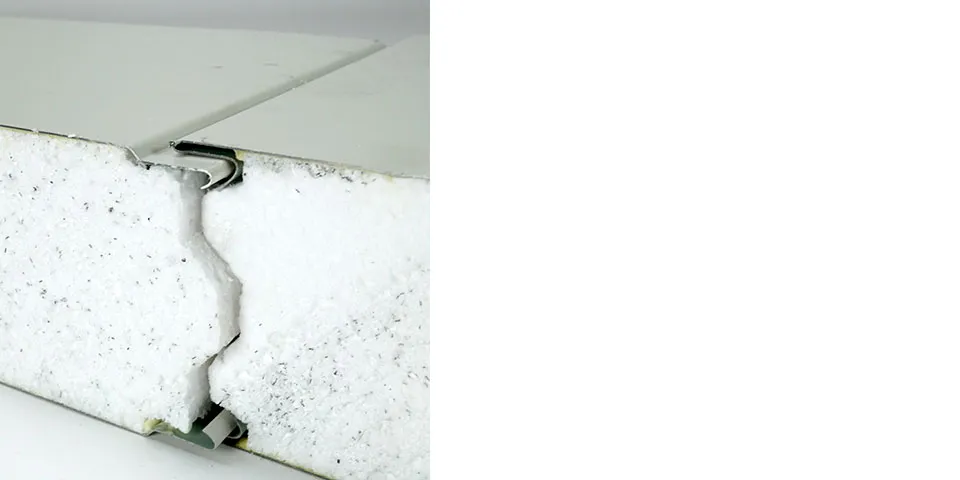
High-quality EPS sandwich panel bearing the CE mark.
Raising awareness
“I want to raise awareness of this,” Lotterjonk continues. “Think of the current asbestos problem: at the time, it was also considered a perfect building product, and now tens of thousands of square kilometres of polluting asbestos are being removed from buildings. We need to make sure this does not happen with sandwich panels.” That is precisely why Hermes is bringing EPS sandwich panels to the attention of façade contractors and architects. “Making buildings more sustainable and feeling more optimistic about the future of the environment are both extremely important today.”
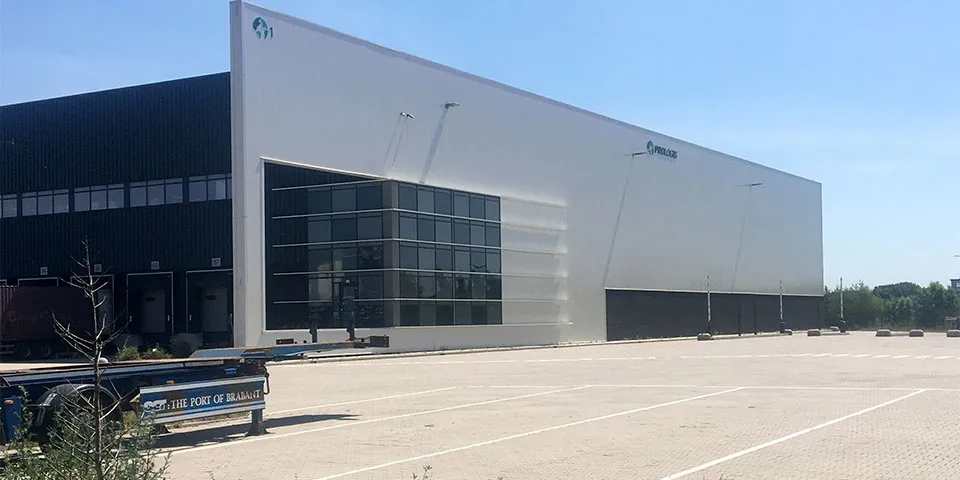
EPS sandwich panels are already widely used in commercial buildings.
Load-bearing capacity
“Especially when a panel does not necessarily need to be very slim, but does need to be load-bearing and offer high insulation values, an EPS sandwich panel is the perfect solution. It is already widely used in commercial buildings for applications including partition walls, stackable units, cold and freezer rooms, and containers.” Lotterjonk cites potato storage facilities in the north of the country, companies’ technical rooms and even near-laboratory spaces as examples of where Hermes has already used EPS panels. Their low weight and ease of installation, alongside their exceptional strength, insulation properties and sustainability, are important reasons to choose them. “Hermes is also a flexible partner with direct communication and short lead times, offering a strong, high-quality panel,” Lotterjonk adds.
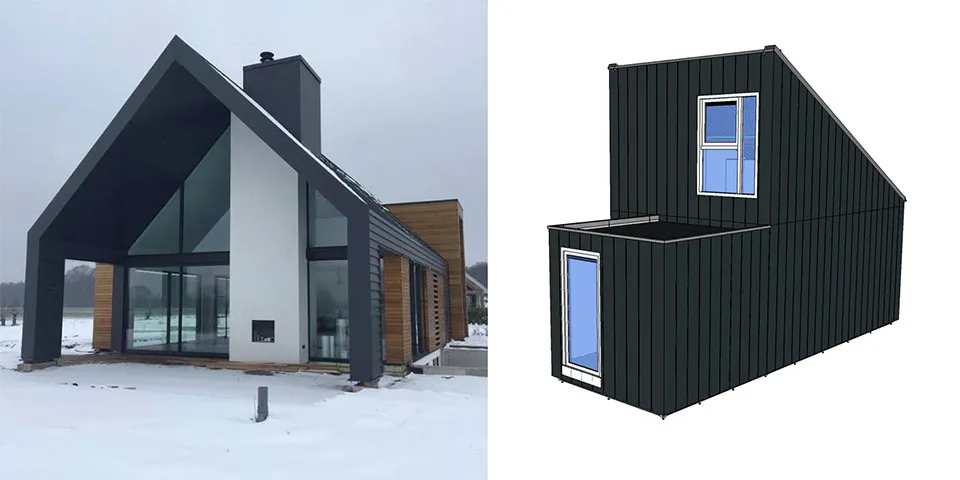
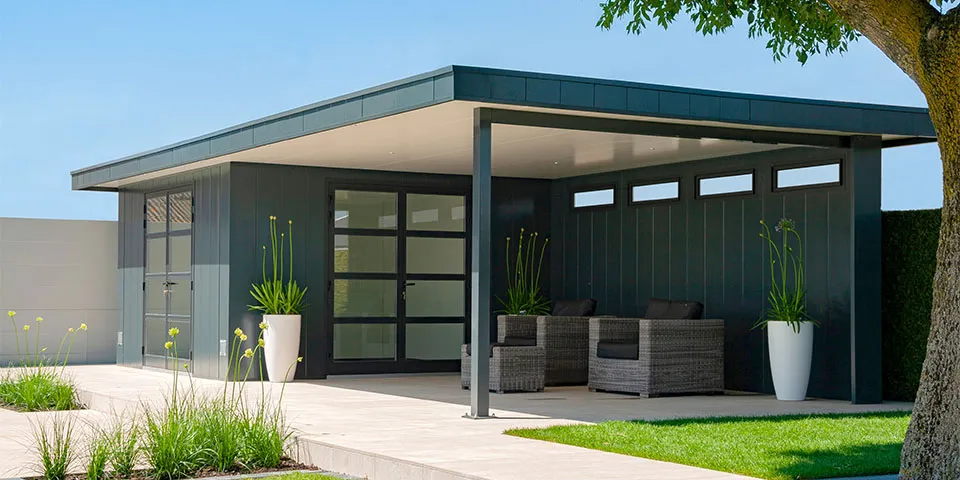
Hermes EPS sandwich panels used in housing and in the design of a small home.
New developments
Over the past four years, Hermes has taken important steps to benefit the environment and introduced developments in other areas too. “We have invested in developments aimed at outdoor applications,” says Lotterjonk. These include garden sheds, fences and canopies. This activity has since become a separate limited company, Hermes Tuinhuizen, which uses Hermes Isolatiepanelen’s EPS panels for these applications. In consultation with an architect specialising in small homes, the company has developed a small home using its EPS panels. It is not to be confused with a tiny house, and can accommodate two people. It has a living room, kitchen, shower and storage space, with a bedroom upstairs. “You can move around and live in it perfectly well. It is prefabricated and circular, which is what makes it so appealing. It is built in accordance with the Temporary Housing Act, so the difficult-to-meet requirements of the Housing Construction Act do not apply. It is a promising development,” Lotterjonk concludes.
Question about this story? Ask your question
Keep following this
Get an email when a new story is published. No account needed.
- ThemeAn energy-efficient and comfortable building envelope
- SubjectPanels & profiles