








Circular Experience: a truly immersive experience!
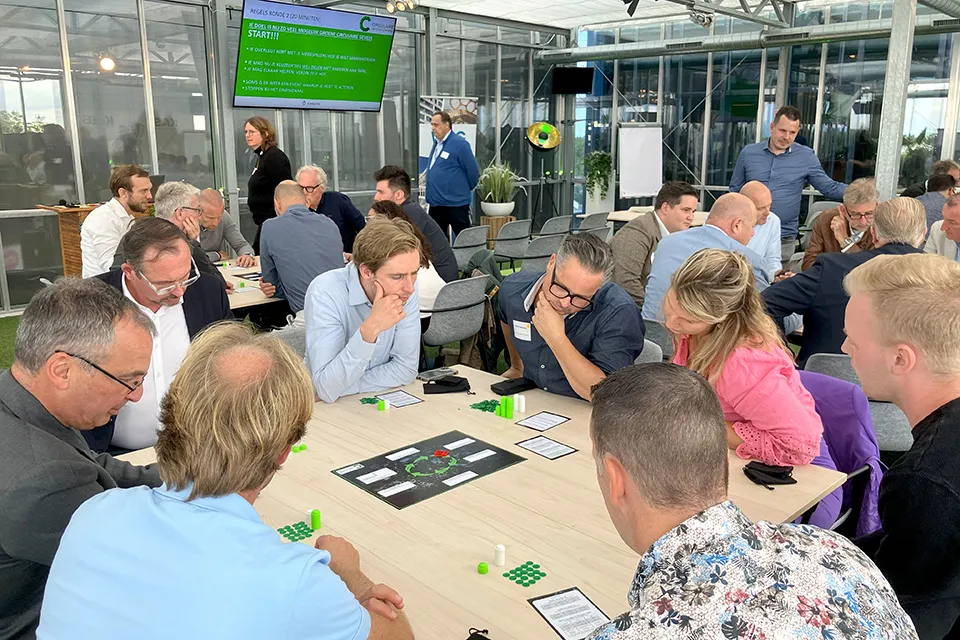
On 17 September, the VMRG hosted the Circular Experience at Kas Woerden. Attendees were treated to two hands-on workshops: Circular Game and Design Game, designed to highlight the importance of the Circular Façade Economy. This new format stimulated creative thinking and created a convivial atmosphere. Afterwards, attendees had the opportunity to chat and exchange ideas over drinks and nibbles.
Circular Façade Economy
The VMRG initiated the Circular Façade Economy, which was at the heart of this event. The Circular Façade Economy is a collaboration between five trade associations in the façade industry: the Vereniging Metalen Ramen en Gevelbranche (VMRG), Vereniging Kunststof Gevelelementenindustrie (VKG), Nederlandse Branchevereniging voor de Timmerindustrie (NBVT), Bouwend Nederland Vakgroep Glas and Algemene Branchevereniging Hang- en Sluitwerk (VHS).
Manufacturers in this sector want to take responsibility together. This means maintaining the highest possible quality of façades, so that façades, façade products and materials are suitable for another cycle and can re-enter the biological and technical cycles. It also means designing buildings so that they can be easily dismantled, allowing products to be reused or recycled in a ‘clean’ state, and organising the entire reverse logistics process accordingly.
The Circular Façade Economy continues to make progress. Over the past year, significant steps have been taken, including the signing of the Gevelakkoord and the establishment of the foundation. This provides even more reason and motivation to share knowledge with organisations both within and beyond the façade sector.
Sustainable solutions
The importance of circularity in façade construction was at the heart of the Circular Experience, an inspiring afternoon focused on knowledge-sharing and collaboration. With the aim of sharing knowledge in an interactive and engaging way, various industry stakeholders were invited to pool their creativity and expertise. The afternoon began with an inspiring opening presentation by Monique Fledderman (Director, Circular Façade Economy) and Onno-Hans Nooteboom (Platform-IO), who briefed attendees on the latest developments in the Circular Façade Economy. They highlighted the urgency and opportunities of circularity in façade construction, setting the tone for the rest of the programme. Participants were introduced to the two interactive workshops, Circular Game and Design Game. Both challenged attendees to think about sustainable solutions and collaboration in a playful way, leading to fresh insights and inspiring ideas. The workshops were launched with the words, ‘Let the games begin’. Curious and divided into different teams, attendees took part in the activities.
Working together in a circular system
A mysterious jute bag placed on the table for each team caught everyone’s attention. Shortly afterwards, it revealed a circular board game depicting a fictional aluminium value chain, with an emphasis on the choices involved and their effects. Guided by Monique Fledderman, the players took on various roles, including manager, developer, designer, demolition contractor and manufacturer, and were asked to explore the processes in the circular system over four rounds. The temptation to prioritise the best individual choices over the collective interest was strong. Although profits grew here and there, the circular system itself ground to a complete halt. This challenged players to reconsider their choices. As the rounds progressed and new game elements were introduced, the message became increasingly clear: teamwork is the solution!
Circular design
Guided by Emma Kolk (Circular Innovation and Environment Adviser, VMRG), participants took on the challenge of designing and redesigning for circularity. Each team received a box containing an equal share of the materials and was free to create something of its own. In the first round, the teams became completely immersed in the design process, and every creation was unique. Only in the second round, when asked to create an entirely new design using the materials already in use, did the value of reuse become tangible. The teams were confronted with issues including ease of disassembly, damage, flexibility and design constraints. These real-world issues prompt questions about circular design, who is responsible for it and at what stage of the process it actually begins.
A circular future
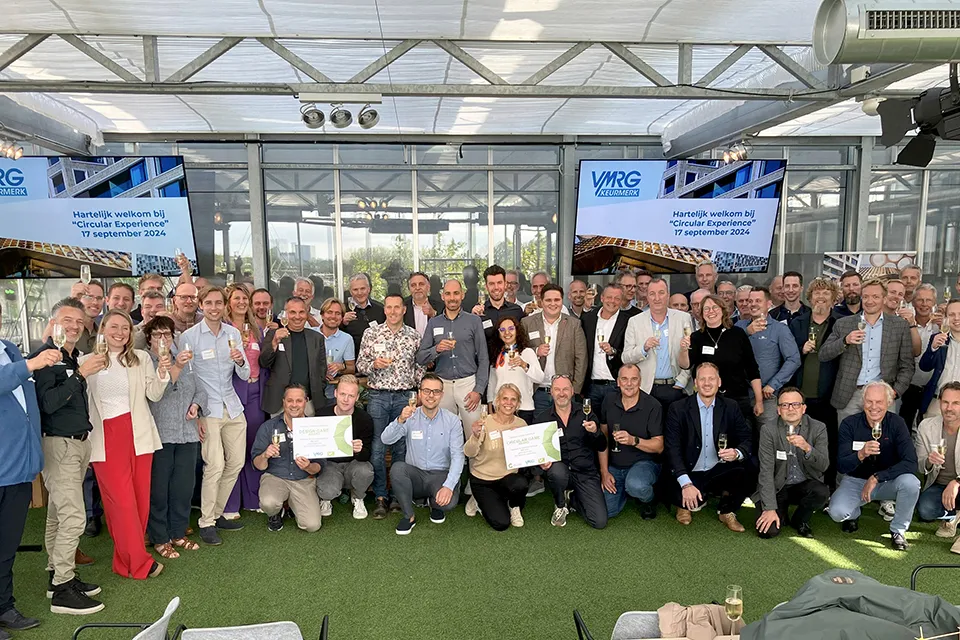
At the end of the workshops, the teams voted for one another. The two teams with the highest scores were announced as the winners during the plenary closing session. Each team received a voucher for a generous donation to Utrechts Landschap. The Circular Experience concluded with a celebratory toast with flutes, followed by drinks. Valuable conversations continued and new connections were made. Here’s to a circular future!
Find out more? Visit www.circulairegeveleconomie.nl
Question about this story? Ask your question
Keep following this
Get an email when a new story is published. No account needed.
- ThemeCircular facades with lower environmental impact
- SubjectVMRG







