








Circularity in the built environment requires an integrated approach
Over the coming decades, the world will face enormous change and extreme challenges relating to the way we use and process resources. The traditional approach, in which resources become waste, must be replaced by a regenerative approach that emphasises the need for integrated, effective and inclusive tools and methods.
The transition to a circular economy, aimed at eliminating waste and making circular use of resources, has been adopted as a key development pathway at both small and large scales. This is reflected in government action at national and European level, closely linked to the Sustainable Development Goals (SDGs). As part of the ‘Nederland Circulair 2050’ programme, the Construction Transition Agenda was published in 2019, followed a year later by the ‘Uitvoeringsagenda Circulaire Bouweconomie’. It is therefore clear that the façade industry is looking at new ways of designing and building. Research, teaching and valorisation activities must guide and support this transition.
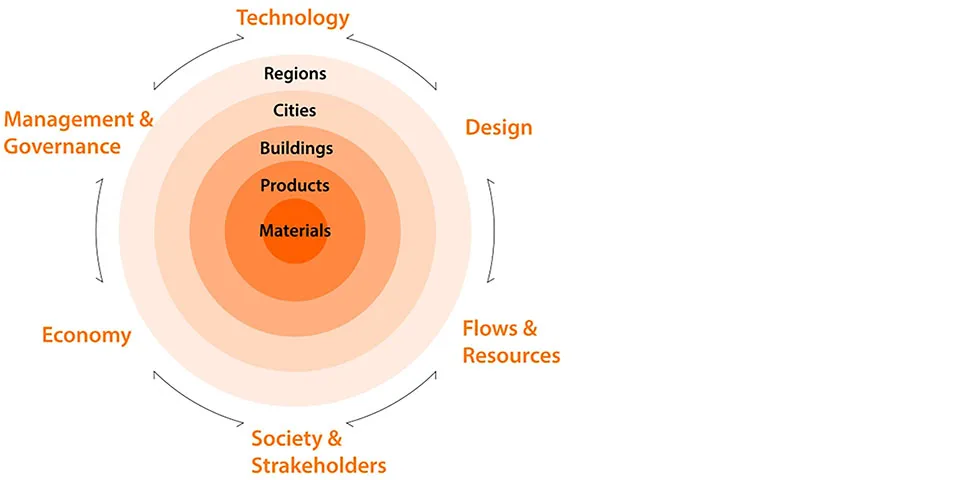
Figure 1: CBE Model, scales and disciplines. TU Delft, Faculty of Architecture and the Built Environment
The Circular Built Environment Hub
The Circular Built Environment (CBE) Hub focuses on fostering the development and exchange of knowledge to create a circular built environment that enables the design of future buildings, cities and infrastructure. At TU Delft’s Faculty of Architecture and the Built Environment, activities relating to ‘circularity’ have been integrated across all departments. This has made it possible to develop a multi-scale and multidisciplinary Circular Built Environment (CBE) model aligned with the main themes (Figure 1). The aim is to structure and connect research efforts across disciplines in an academic setting, and translate them into theoretical and practical knowledge and skills. The model is aimed at a broad range of stakeholders: the construction and real estate sectors, designers, policymakers and the general public.
Integration across scales
Circularity in the built environment is closely linked to a number of systemic scales. It starts at the Materials and Products scale, the basis for buildings, and how they relate to circular performance. A building is an assembly of a large number of components. The City scale explores the three main resource flows that enter the urban environment every day, circulate within it and then leave the city: water, energy and waste. Finally, the Regional scale encompasses the characteristics of the urban metabolism and the importance of examining economic activities to identify flows and stocks of materials, products and waste.
Innovation is needed in several areas, including new construction and building technologies, new approaches to urban, building and product design, and new management strategies. These innovations must align with systems thinking and the entire value chain, which involves sustainable resources and processes. The societal dimension of a circular built environment is immense, given the many stakeholders involved. Combining new solutions with economic benefits is key to implementing the new approach. To manage and govern this transition effectively, strong interaction is needed between the disciplines and scales outlined above. This is at the heart of the CBE model.
Engagement with the façade industry
Our role as a university is twofold. Research involves creating new knowledge, teaching it and sharing it. Dissemination strategies target a range of stakeholders, from students to the construction industry, designers and policymakers. We use a variety of approaches. On-campus teaching is a core activity, but we also produce academic publications and practice-related research stories, run workshops with professionals and offer, for example, lifelong learning modules. Here are a few examples.
The BuckyLab prototyping studio
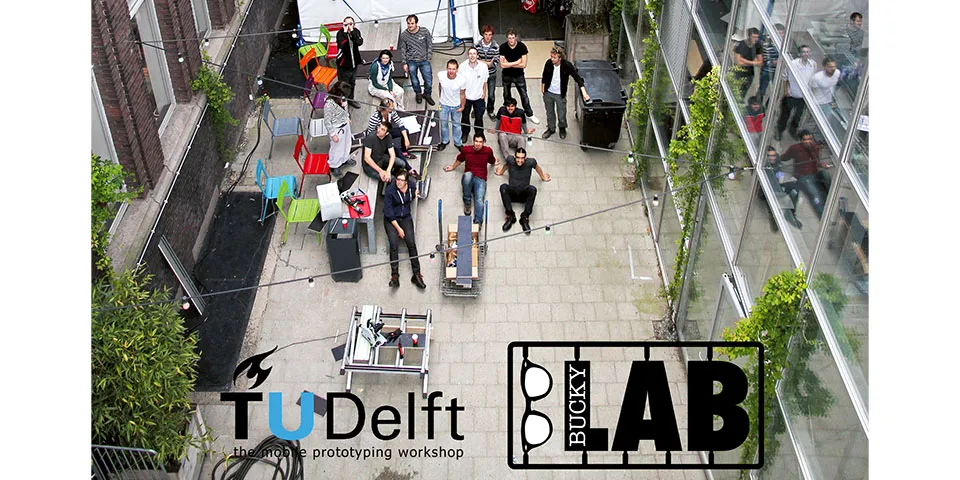
BuckyLab is an MSc course in the Building Technology programme at the Faculty of Architecture and the Built Environment in Delft, led by Marcel Bilow. It focuses on the materials and products scale. Innovative design concepts are translated into 1:1 scale prototypes, making it possible to test material properties and real-life functionality. Industry is closely involved in the course, providing materials, tools and ideas for applications. The Lab is mobile and has also travelled to international locations.
Online education on CBE
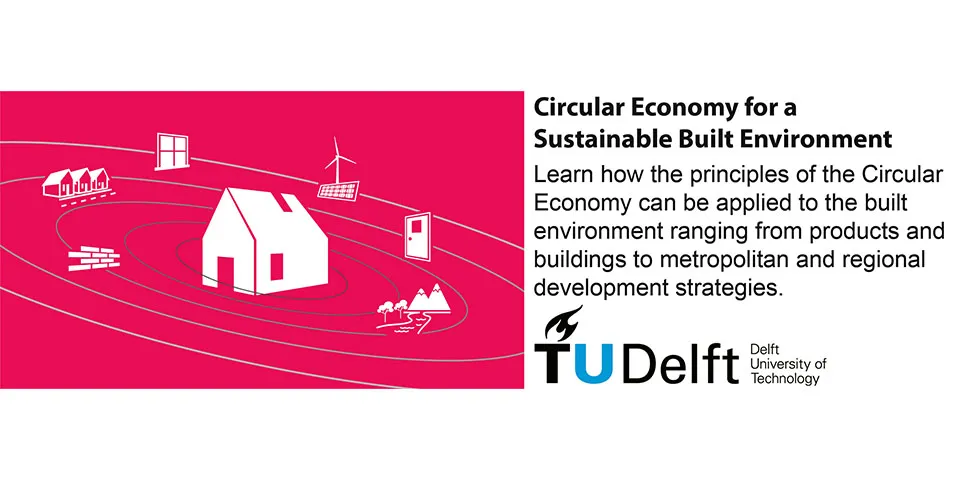
The online course Circular Economy for a Sustainable Built Environment was developed as a collective effort by the CBE Hub. It is aimed at professionals seeking an introduction to the circular built environment, while also complementing BSc and MSc campus teaching. It provides an initial coherent overview of the CBE model and is aligned with ongoing research at the faculty.
Façade Reverse Logistics
Despite the significant potential for reusing metals and components in the façade industry, there are currently few examples of products being recovered and reprocessed. The FacadeReLog (Façade Reverse Logistics) project was therefore launched to promote the reuse of metals in the façade industry. It aims to bridge the knowledge gap in business models and industrial processes that currently hinders the reuse of increasingly complex products and their valuable materials. Over the next two years, we will develop teaching materials and workshops in collaboration with leading companies and international industry associations (ASEFAVE, CAB and FAECF), under the leadership of VMRG. This will result in an educational programme for façade companies.
Numerous people have contributed to this article, directly or indirectly. The projects and activities described are examples. For more information, visit: www.tudelft.nl/CircularBE
Question about this story? Ask your question
Keep following this
Get an email when a new story is published. No account needed.
- ThemeCircular facades with lower environmental impact
- SubjectVMRG







