








Environmental legislation for façade construction
The R-ladder versus closing or slowing the loop
In Gevelbouw 2 this year, we discussed circularity, the R-ladder and the six circular strategies for façade design. There is another way to approach circularity alongside the R-ladder, namely ‘Close or Slow the loop’.
How do the R-ladder’s circularity strategies relate to ‘Closing the loop’ and ‘Slowing the loop’?
Slowing the loop
‘Slowing the loop’ aims to maximise the use of products and materials over time, reducing the overall flow of raw materials by delaying the need for new materials and products.
This can be achieved through various strategies, such as:
- Product design: Creating durable products that last.
- Repair and maintenance: Developing products that are easy to repair and offering maintenance services to extend their service life.
- Reuse and repurposing: Finding new applications for products after their original purpose has been served.
- Product stewardship: Offering consumers incentives to extend the service life of their products and return them for recycling when they are no longer usable.
Closing the loop
‘Closing the loop’ focuses on creating a circular flow of raw materials, in which materials are continuously recycled and reused. This means reintegrating materials from used products into the production process, minimising waste and raw material extraction.
Relationship with the R-ladder
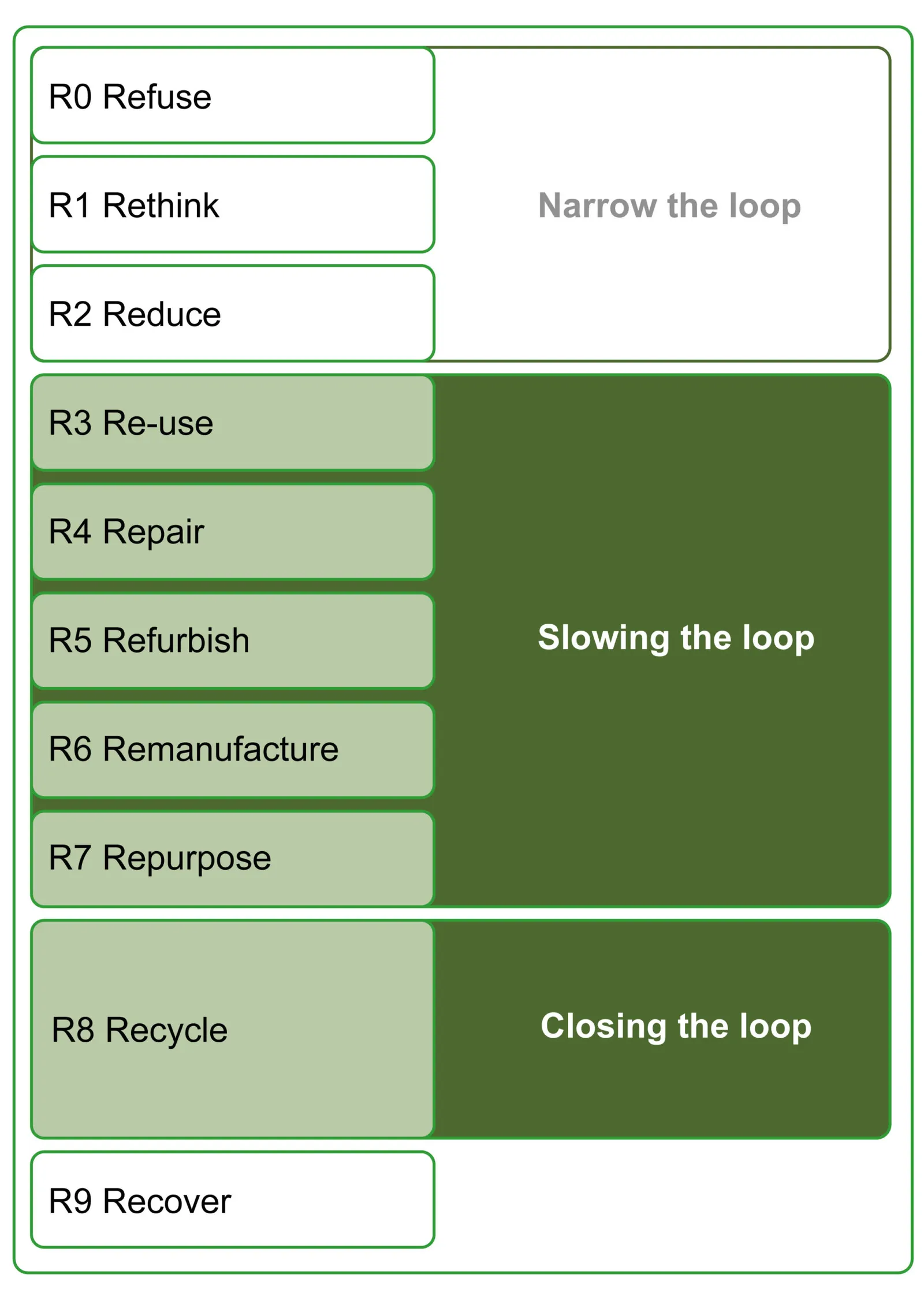
There is some overlap between the R-ladder and ‘Slowing or Closing the loop’ (see image). The key difference in their underlying thinking is the idea of ‘better’ or ‘worse’ options. The R-ladder establishes a hierarchy in which reuse ranks higher than repurposing, and often assumes that when an action such as refurbishment is no longer possible, recycling is still an option. However, many materials and products cannot be recycled to the same level because of technical limitations, design choices or treatments.
An integrated approach to products
‘Slowing the loop’ and ‘Closing the loop’ assume that there are multiple flows, and that one is not necessarily better than another, but that both help reduce the need to add raw materials. When a material does not fit into a closed loop, reuse options must be considered. If a product is unlikely to be reused, recycling options at material level should be explored.
Across all the approaches within the R-ladder, as well as slowing and closing the loops, products must be considered holistically. How do they work together with other products? What materials are used to make them, and how are they connected to one another? How do we ensure that documentation is available at end of life?
Closing the loop for façade contractors
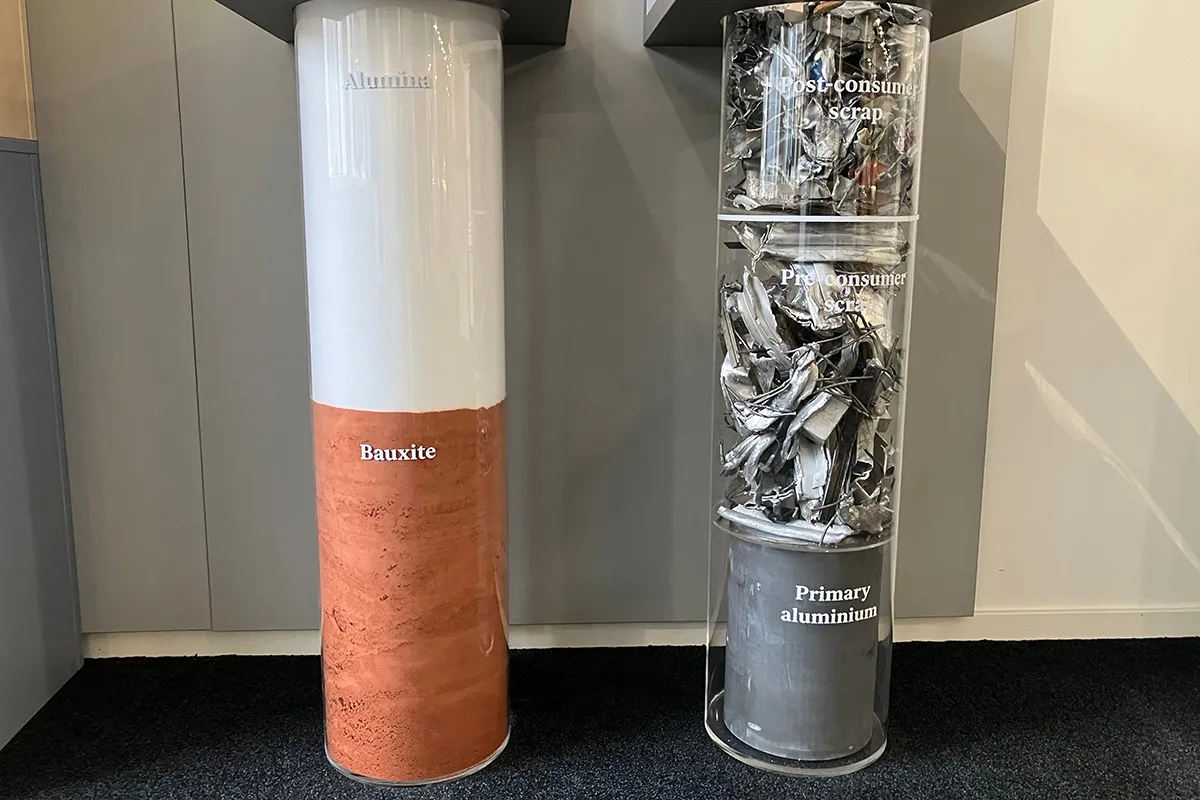
For façade contractors working with metals, the thinking behind ‘Closing the loop’ is often a good fit. The materials they use are of high quality and retain that quality after recycling. There are, of course, conditions. All materials must be separable from one another at alloy level. But when this is done correctly, aluminium and steel can be recycled indefinitely. That is why the metal façade sector is also taking responsibility for closing the loop, so that it can continue indefinitely in the future.
Question about this story? Ask your question
Keep following this
Get an email when a new story is published. No account needed.
- ThemeCircular facades with lower environmental impact
- SubjectVMRG







