








Environmental legislation for the façade construction sector: CSRD

European sustainability reporting
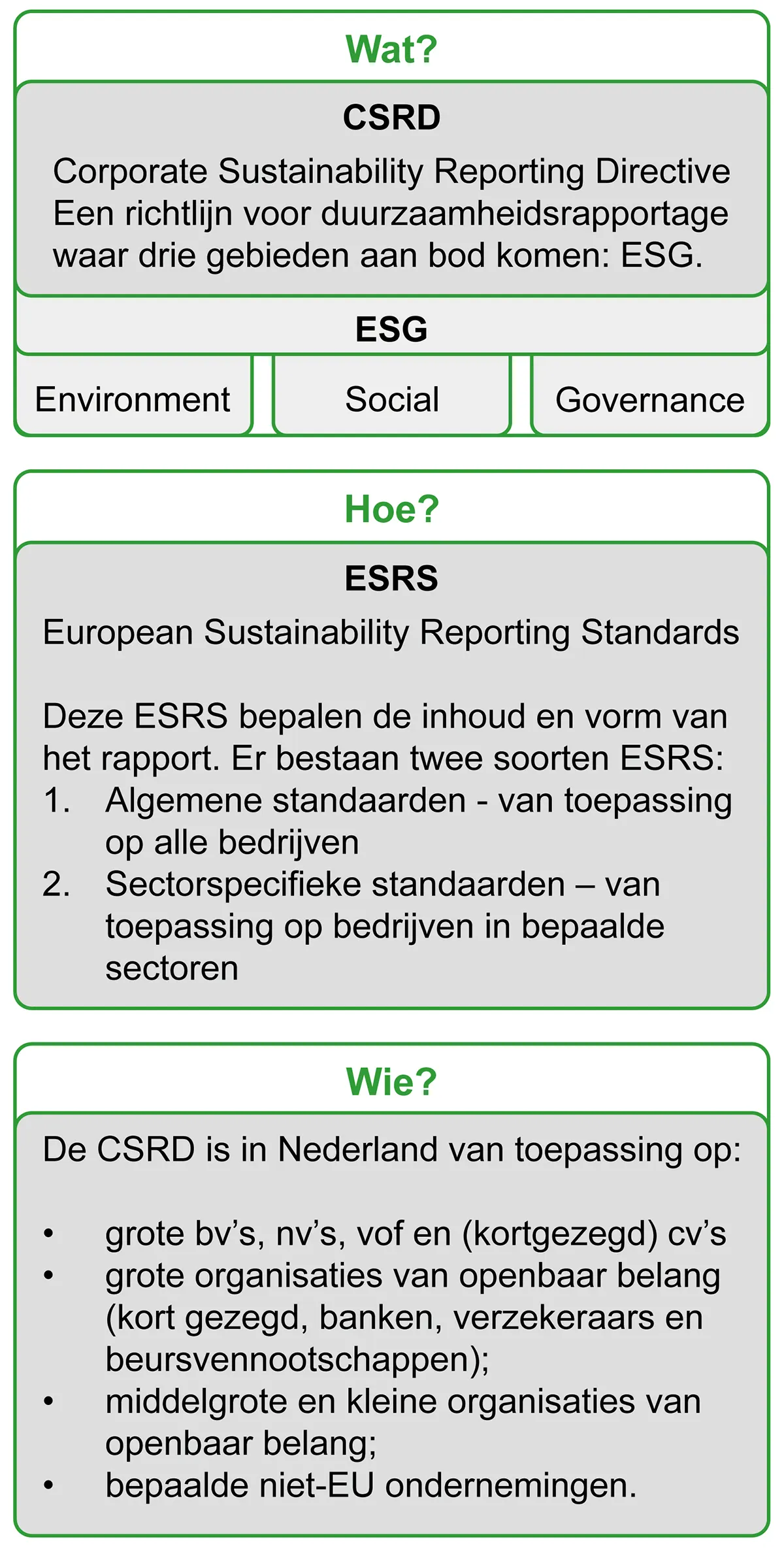
The CSRD (Corporate Sustainability Reporting Directive) is a European directive on sustainability reporting. It requires companies to report on their sustainability performance using a range of sustainability criteria.
The CSRD covers three areas: Environment, Social and Governance, also known as ESG. Exactly what must be reported in these areas is set out in the European Sustainability Reporting Standards (ESRS), so that every company reports in the same way. This includes, for example, CO2 emissions, the gender balance at senior level, personnel policies, and information on managing relationships with suppliers and impacts on the supply chain.
Large companies are already required to report in this way. Most companies associated with façade construction are not that large, but there is a good chance that companies in the façade sector have already contributed indirectly to other companies’ reporting.
A proactive approach
Even if your company is not (yet) required to produce such a report, it is still worth being prepared, initially at least for questions from other companies. A proactive approach to the CSRD is therefore recommended. Contributing to the reporting of suppliers and customers gives your company a head start. Although the CSRD may initially feel like an additional administrative burden, questions from suppliers and customers also present an opportunity. They are already working on this and know what information to request. The data will not change from one request to the next, so your company will already be prepared for CSRD-related questions in the future.
LSME limit
The Listed Small and Medium Enterprises (LSME) standards set the upper limit on the scope of information requests. Large companies may only request information from SMEs up to the LSME limit, also known as the LSME ceiling. This makes the LSME standard useful for SMEs that are not covered by it too, as it allows them to anticipate potential questions from large companies that are covered by the CSRD.
Collaboration
One of the central aspects of the CSRD is working with value chain partners to increase your impact. Learning, collaborating and actively engaging not only increase your organisation’s impact, but also lead to greater efficiency and cost savings. This can be achieved, for example, through due diligence, supplier assessments and risk analyses.
First reports
Many companies fear that the CSRD will expose areas where they are falling short or where they still face a heavy administrative workload. However, the CSRD reports published by large companies show that many are doing better than they expected. For many companies, the first report is a very welcome baseline against which they can demonstrate improvement.
As established large companies are required to operate more sustainably, this is expected to lead to interesting collaborations with young, innovative companies offering suitable sustainability solutions. After all, we cannot solve today’s and tomorrow’s problems using the same methods, companies and value chains that caused them.
Question about this story? Ask your question
Keep following this
Get an email when a new story is published. No account needed.
- ThemeCircular facades with lower environmental impact
- SubjectVMRG







