








Expanded capacity and test facilities at SKG-IKOB for smoke control testing to EN 1634-3
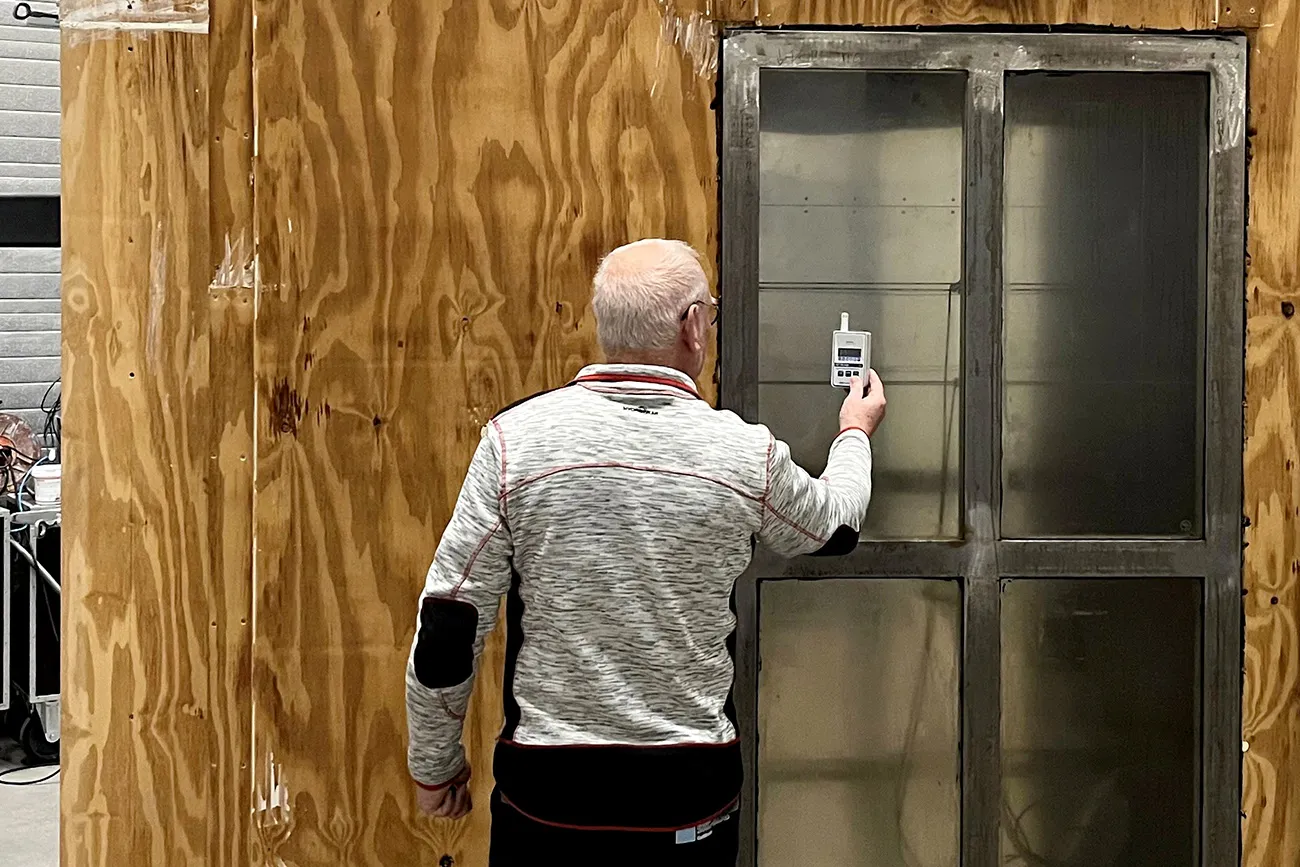
It is now widely accepted that a building’s overall fire safety concept goes far beyond the fire resistance of its load-bearing and separating structures. In the event of a fire, being able to escape safely is crucial. Smoke is harmful, contaminated air that makes breathing and visibility more difficult during escape. In the past, it was assumed that the smoke control performance of a construction could be determined by testing the fire resistance of a separating element against the integrity criterion (E). That is no longer the case. A separate test to EN 1634-3 is required to determine smoke control performance. SKG-IKOB has the necessary test rig, so this testing can now also be carried out in Geldermalsen.
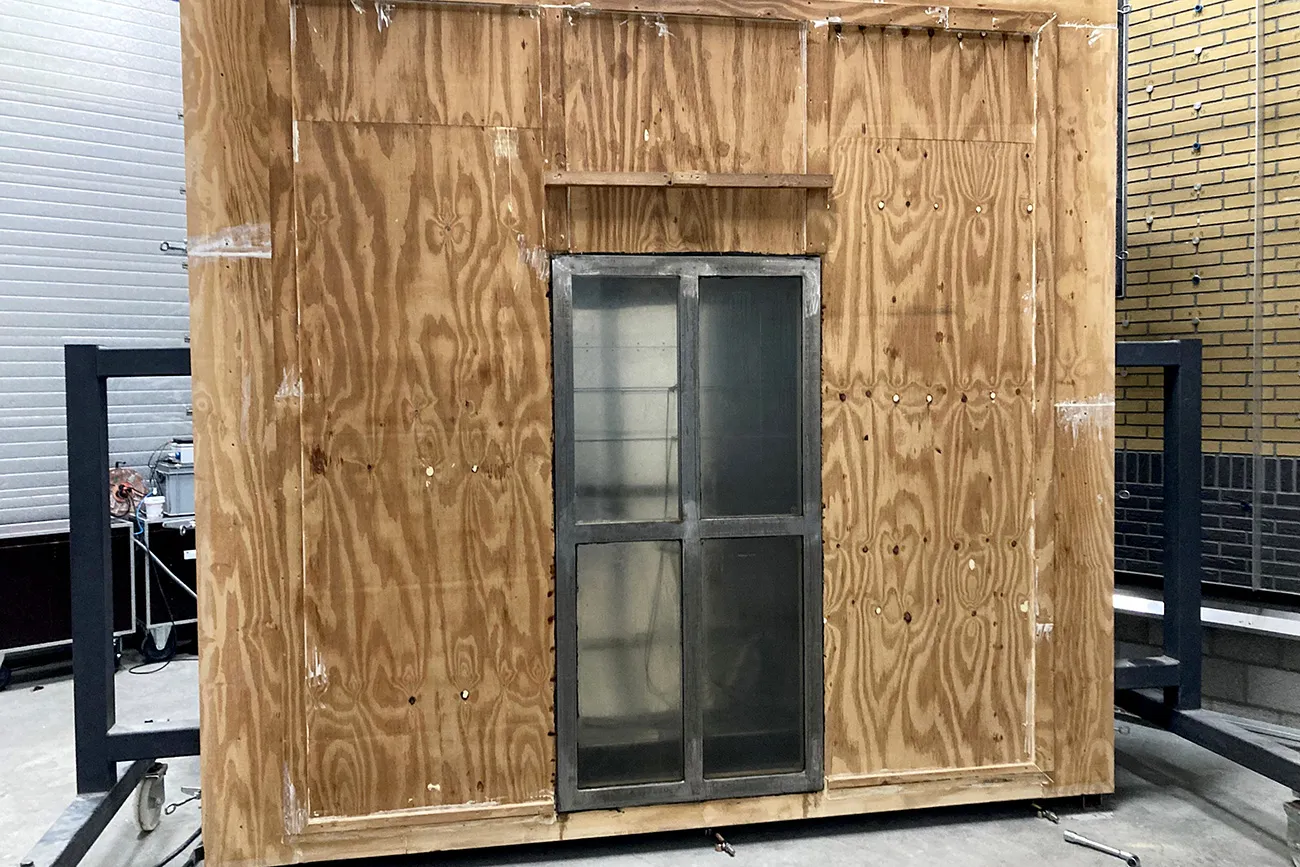
Accreditation and Notified Body
Recently, the Dutch Accreditation Council (RvA) assessed smoke control testing at SKG-IKOB against the requirements of ISO/IEC 17025. The results of this assessment will expand the scope of the SKG-IKOB laboratory in Geldermalsen, allowing this smoke test to be carried out under accreditation and the results to be used for CE marking in accordance with EN 16034.
Current legislation and regulations
Until mid-2021, the Building Decree used the 1.5 x rule to determine smoke control performance. This assumed that smoke resistance, in minutes, was 1.5 times the integrity, also in minutes. A separating element tested for 20 minutes for integrity was therefore deemed to provide 30 minutes of smoke resistance. This assumption is not always realistic, and the 1.5 x rule now applies only to existing buildings under the current version of the Building Decree and the future Bbl.
Through an amended NEN 6075, the Building Decree specifies a more realistic method for determining the smoke control performance of building elements. This method uses a test to measure the actual air leakage of a building element, after which its smoke control performance can be classified according to the amount of leakage.
One difference from the old method is that smoke control performance is no longer expressed in minutes. NEN 6075 specifies EN 1634-3 as the test standard. Following a successful leakage test, the building element can be classified as Sa (smoke control at ambient temperature, also known as cold smoke) or S200 (smoke control at elevated temperature, also known as medium-temperature smoke). NEN 6075 also describes how building elements not originally covered by EN 1634-3 can nevertheless be tested and assessed. Examples include service penetrations and joints, for which NEN 6075 specifies the test method and maximum permitted air leakage.
Test procedure
As part of European harmonisation, a European test standard, EN 1634-3, was developed to determine the smoke control performance of doors, shutters and openable windows. Before testing, a building element such as a door is installed in a test frame, which is then clamped against the test chamber. This electrically heated chamber applies positive pressure to one side of the door. Air leakage is measured at a given pressure differential at ambient temperature (20°C; Sa) and/or elevated temperature (200°C; S200).
If the aim from the outset is to achieve an S200 classification, the test chamber is heated from 20°C to 200°C within 30 minutes. Air leakage is then recorded at 10, 25 and 50 Pa. To achieve an Sa classification, air leakage is recorded only at 10 and 25 Pa, at a temperature of 20°C.
To achieve an S200 or Sa classification for a building element such as a door, air leakage must not exceed:
S200, single-leaf door: 20 m3/h at 50 Pa.
S200, double-leaf door: 30 m3/h at 50 Pa.
Sa: 3 m3/h per metre of joint length at 25 Pa (the threshold may be sealed airtight with tape.
The door’s physical behaviour, including any warping, is also observed during the test.
Question about this story? Ask your question
Keep following this
Get an email when a new story is published. No account needed.
- ThemeSafe and verifiable facade construction
- SubjectVMRG







