








Solar shading in the energy performance calculation
Text VMRGImage DUCO Ventilation & Sun Control en Renson
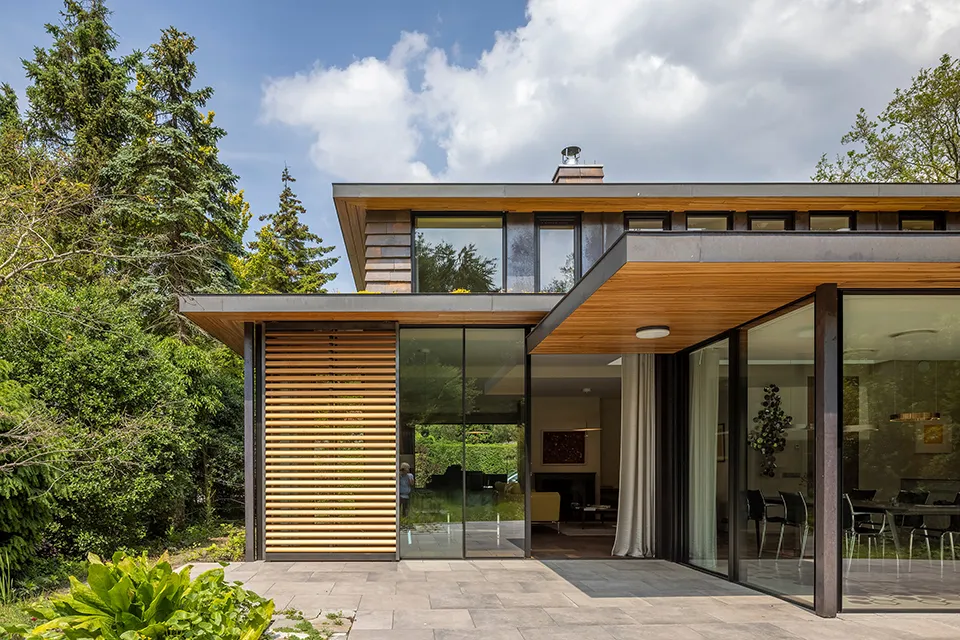
Since 1 January 2021, all new-build projects, both residential and non-residential, have had to meet the requirements for Nearly Zero-Energy Buildings (BENG) as part of the planning application. To determine a building’s energy demand (BENG 1), the BENG calculation establishes both heating and cooling demand for each month. The results of these 24 calculations are added together to determine the total energy demand. The calculations use monthly average values.
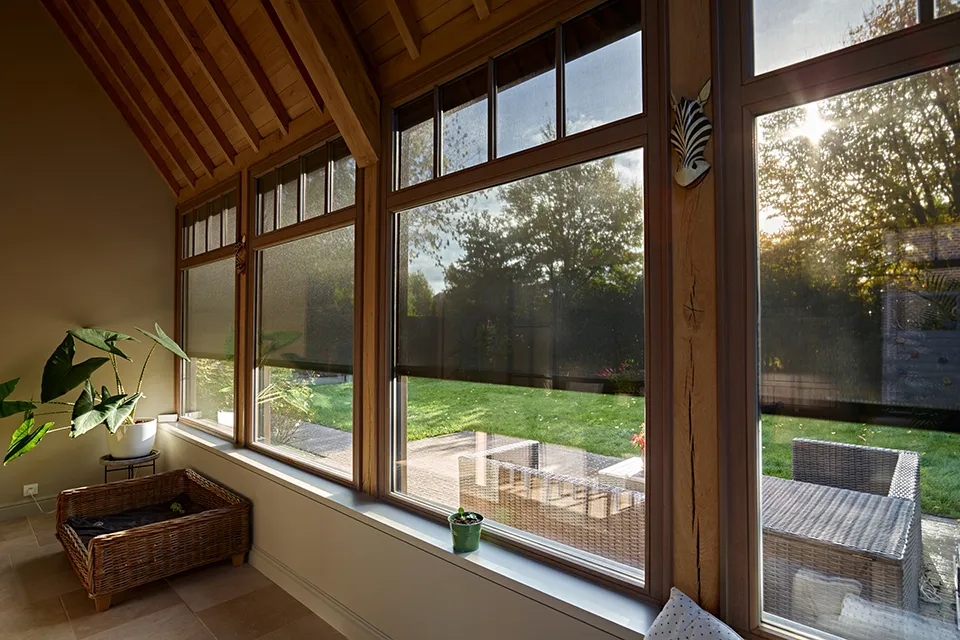
The assumptions underlying the BENG calculation, as set out in NTA8800, mean that in most homes cooling demand accounts for less than 10% of total energy demand. This often differs from calculations based on hourly data. As a result, regulations often underestimate the risk of overheating, and solutions that reduce cooling demand are not adequately reflected in BENG calculations. In practice, however, complaints about overheating are on the rise. Future climate scenarios also predict higher temperatures. It is therefore becoming increasingly important to consider a building’s cooling demand carefully during the design process and follow the so-called “cooling hierarchy”. This consists of four steps:
1. provide a cooler environment (e.g. with trees or a green roof);
2. keep heat out (for example, with screens or solar shading);
3. use passive cooling (for example, with night-time ventilation);
4. use environmentally friendly active cooling (for example, with a heat pump).
Using movable solar shading
Solar shading reduces solar heat gains, thereby lowering a home’s cooling demand. Until 2024, the BENG calculation used the same time fractions for when the solar shading was lowered in both the heating and cooling demand calculations. This increased heating demand during the shoulder seasons, because the desired solar heat gains were reduced.
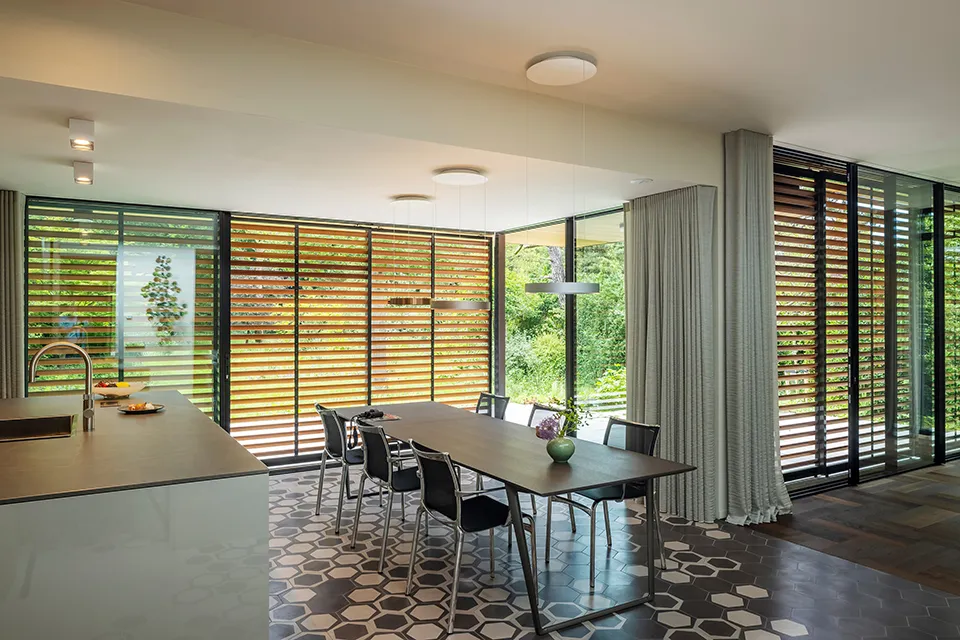
As heating demand accounts for most of a building’s energy demand, the effect of solar shading is not clearly reflected in a BENG calculation. Fortunately, this is set to change with the 2024 version of NTA8800. With manually operated or intelligently controlled solar shading, it now remains raised whenever the building has a heating demand. This makes optimum use of the solar shading by allowing free solar heat to enter when it is needed. Heating demand in winter and the shoulder seasons does not increase, while cooling demand will always decrease.
This reflects how solar shading works in practice: it adapts very well to the seasons and to users’ heating or cooling needs. In winter and the shoulder seasons, useful solar heat gains can be harnessed, while on warm days the unwanted entry of solar heat into the building can be limited. Solar shading also blocks direct sunlight. This benefits both the thermal and visual comfort of occupants.
It is precisely this adaptive behaviour that makes solar shading an ideal way to create a good, healthy indoor climate. It is important to bear in mind that the BENG calculation is not a comfort calculation.
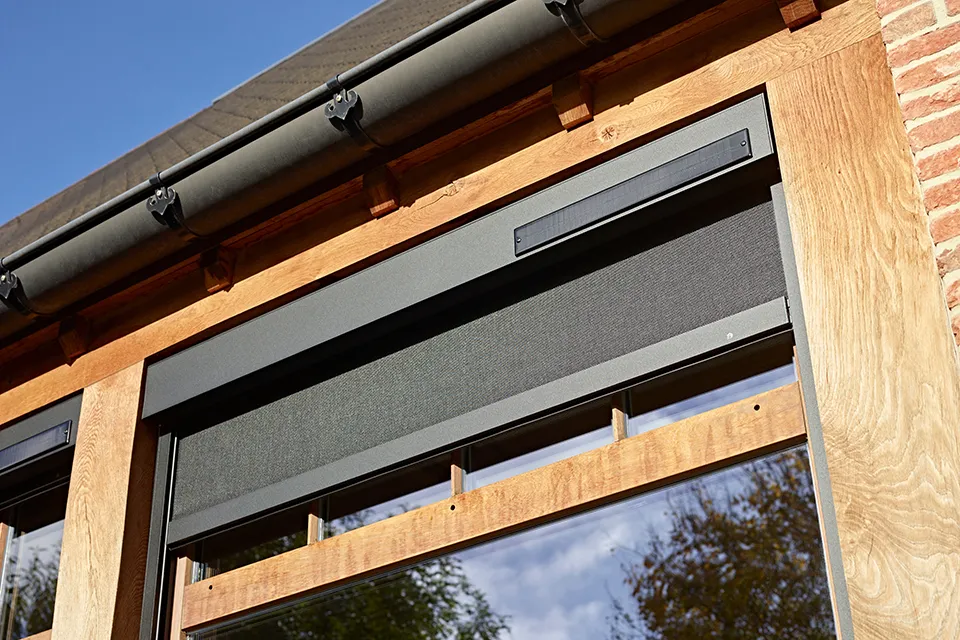
Solar shading in a building with cooling
When active cooling is used in a building, the system often lacks sufficient capacity to keep the home at the desired temperature throughout the season. Meeting this cooling demand with an active cooling system leads to a substantial increase in the home’s energy consumption.
When solar shading is used in a building, active cooling can be avoided for much of the year. After all, if heat does not get in, there is no need to remove it. This is also reflected in the “cooling hierarchy”. Combined with active cooling, solar shading has a positive effect on BENG 2. If additional cooling is nevertheless required, the necessary cooling capacity will be significantly lower. This saves energy in the home, a welcome benefit, especially at a time of high energy costs.
Changes to NTA8800:2024
From July 2024, calculations will use the new version of NTA8800. It will then be possible to model intelligently controlled solar shading. ISO 52016-3 is used to set the controls for the solar shading. This standard specifies the switching points, which depend on heating or cooling demand, illuminance (lux) and indoor temperature. The 2024 version also includes externally operated solar shading in the calculation. This means that sliding panels are now also recognised as solar shading.
Have a business enquiry for DUCO? Get in touch
Companies in this story

Keep following this
Get an email when a new story is published. No account needed.
- ThemeAn energy-efficient and comfortable building envelope
- SubjectVMRG
- CompanyDUCO







