








The Circular Facade Economy enters its second phase
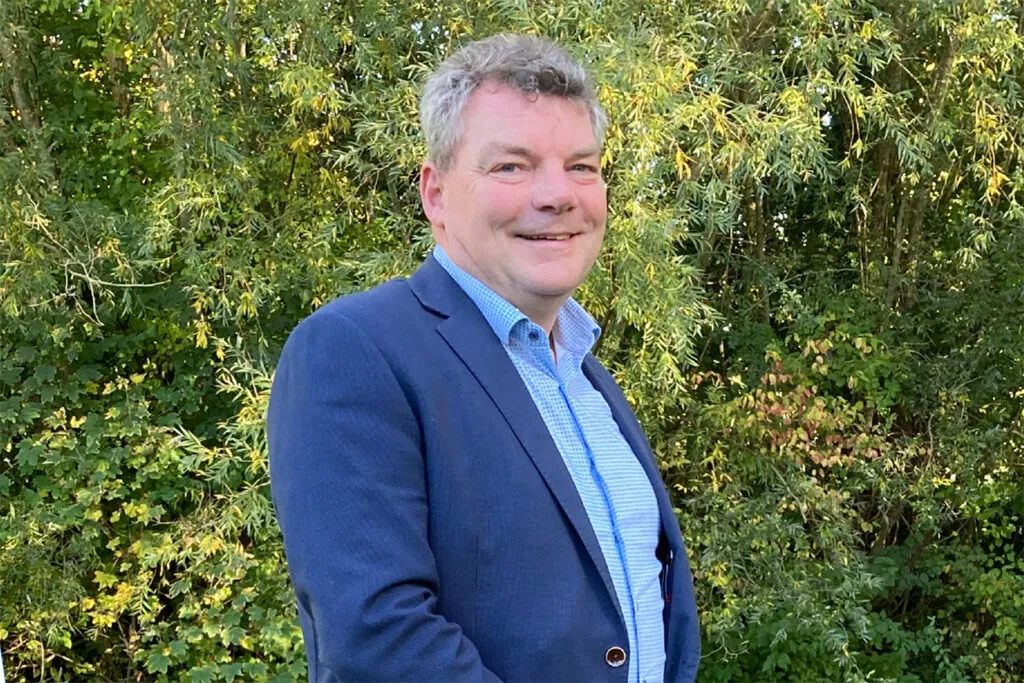
For the VMRG, the Circular Facade Economy began more than six years ago. We had already been working on sustainability, material use and the future of our sector for some time. At the same time, the circularity debate in the Netherlands was gaining momentum. The question was not whether the construction sector would change, but how. Above all, would we as the facade sector take the initiative ourselves, or wait for others to decide what that future should look like?
In 2019, the first exploration of a Circular Facade Economy began. This was followed by the signing of the Circular Facade Economy Agreement with the Ministry of the Interior and Kingdom Relations and the Ministry of Infrastructure and Water Management, and the establishment of the Stichting Circulaire Geveleconomie. An ambition had become a concrete organisation with a shared agenda.
The National Growth Fund programme Future-proof Living Environment enabled us all to get to work in earnest, thanks to the grant awarded for the first phase. This phase focused on exploring, developing, testing and proving. Investment went into knowledge development, standards, collaboration and new tools. The highly successful Circular Facade Economy symposium in Ede, themed ‘Those who work together today are building tomorrow’s facade’, was a fitting conclusion to the first phase, which laid a foundation for the sector to build on.
The National Growth Fund has now also approved funding for the second phase, following the Council of Ministers’ approval on 10 July. In this second phase, the Circular Facade Economy is one of six scale-up value chains.
This is in part thanks to the efforts of the programme team and steering group of Future-proof Living Environment, where VMRG programme manager and deputy lead applicant Monique Fledderman plays an important role for the Circular Facade Economy.
While the first phase focused on development and validation, the second is about scaling up and application. No more experimenting on the sidelines, but implementation in practice.
We face an exciting challenge. Circularity must go from exception to standard, and from frontrunners to the entire market. This calls for ongoing collaboration between industry associations, clients, architects, manufacturers, facade contractors, recyclers and government.
A shift that contributes not only to sustainability and CO2 reduction, but also to innovation, security of raw material supply and a stronger competitive position for our sector.
Real change happens when a sector decides not to wait, but to take the lead itself. The Circular Facade Economy is living proof of this.
Question about this story? Ask your question
Keep following this
Get an email when a new story is published. No account needed.
- ThemeCircular facades with lower environmental impact
- SubjectVMRG







