








VMRG | Product information always at your fingertips
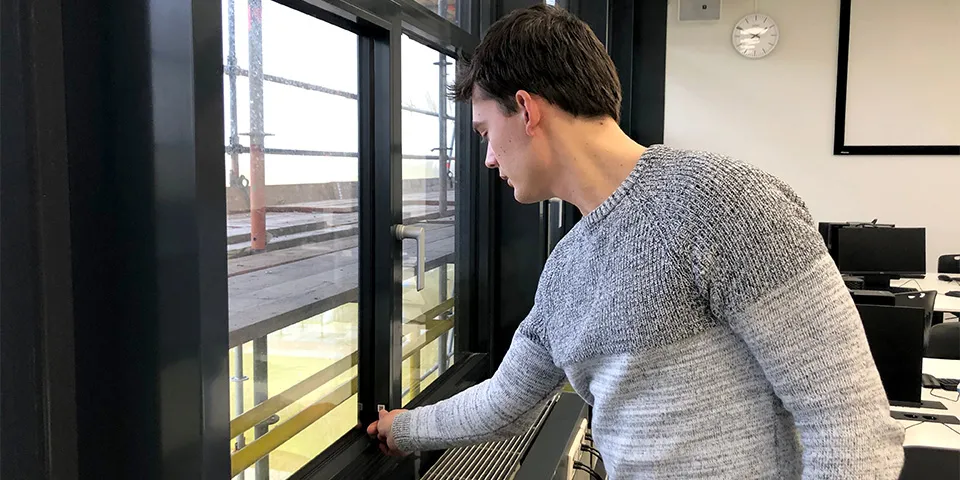
Many companies in the façade industry will recognise these questions. Where has my stillage gone, and how can I avoid wasting time looking for it? How can I more efficiently confirm that my curtain walling has been installed correctly? Cirlinq is the solution, and can save companies a great deal of time and money. Cirlinq ensures that product information remains quick and easy to access throughout the product’s life cycle. It provides insight into equipment, makes maintenance more efficient and reduces paperwork.
Cirlinq is a platform that connects the physical and digital worlds, enabling organisations to easily record, track and share the products around them. The platform was developed in response to manufacturers’ need to take responsibility for the products and services they supply, in order to prevent the waste of materials and raw materials. In practice, this means that they remain connected to their products.
Finding information
In the automotive industry, this is nothing new: enter a number plate and you immediately have access to the car’s full history, including its supplier and where and by whom it has been maintained. In construction, however, it is almost impossible to establish who supplied which product after a project has been handed over, let alone what it is made of or what has been done with it. As a result, organisations spend an average of 25% of their time finding the right information, for example to resolve a product defect. The information is often difficult to find or no longer available. Cirlinq provides insight into what an item is, where it is and what has been done with it, enabling better service and promoting the reuse of products and raw materials. To achieve this, a so-called passport is created for every building, product, material and raw material, making it easy to find them at any time.
Practical example
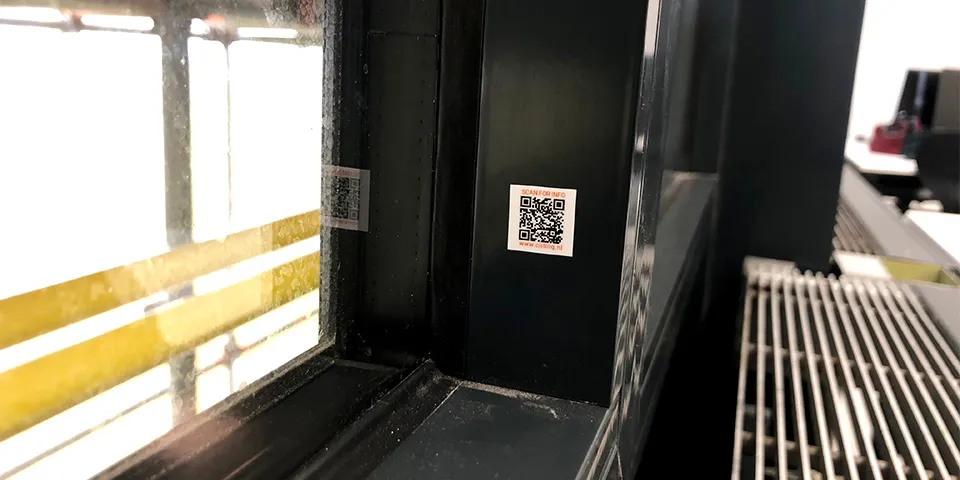
One of the first projects to use Cirlinq was the CiTG (Civil Engineering and Geosciences) building on the campus of Delft University of Technology. Alkondor Hengelo installed a new façade across the entire eastern side, comprising 497 elements. Each element has a unique identifier in the form of a QR code, linking it to the Cirlinq platform. Delft University of Technology has also added a QR code to every room in the CiTG building, linking these to the platform as well. This makes it easy to identify which elements are located in which rooms.
Linking data
The platform acts as a central repository for all data within the organisation. Its structure allows the available data to be presented in different formats, such as a list, a map, 3D and/or 2D. For each façade element, a combination of production data, IFC (a BIM file format), documents, photographs and supplier information is used. For the rooms in the CiTG building, Delft University of Technology data from service management is combined with DWG files (a file format for design data). Data quality, and therefore its usefulness, can vary greatly between organisations, and the data itself can also take many forms. Some still work extensively in Excel and produce DWG drawings, while others use 3D models based on IFC and the ILS Gevel (BIM).
Every element traceable
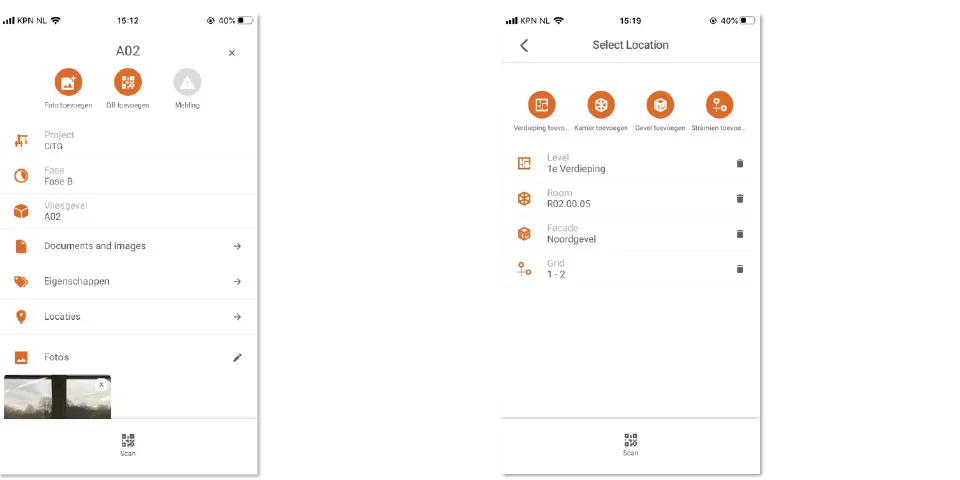
Based on the data, every element is assigned an identifier at the factory, making each one uniquely traceable. A mobile application has been developed to enable users to add or retrieve information linked to an element. This can include photographs, a location (x and y coordinates for a point on the map, as well as its position within the building) and reports. As every element can be traced individually, the quality of the elements leaving the factory can be ensured much more effectively. They also contain all the information needed during installation, as well as during servicing and maintenance. If required, objects can also be identified at a later stage. In the case of the CiTG building, the rooms already existed, so they were linked on site using the mobile application. The same applies, of course, to existing façade elements, building services or interiors.
Location known
Once on site, the façade elements are assigned their final location in the building during installation. This is done both by assigning each element its own location and by linking it to the room in which it is installed. This makes it easy to establish what the products are made of and where they are located during servicing and maintenance.
Interested in Cirlinq?
The Cirlinq platform has been operational since February this year, and companies have shown considerable interest in using it. Further development of the platform will continue this year. The focus is on further integrating active sensors, improving the tracking of product installation and recording reports.
Is your company also interested in Cirlinq? Please let us know via the contact form on the website www.cirlinq.nl
Question about this story? Ask your question
Keep following this
Get an email when a new story is published. No account needed.
- ThemeCircular facades with lower environmental impact
- SubjectVMRG







