








Voluntary CE marking possible for fire- and/or smoke-resistant steel internal doors

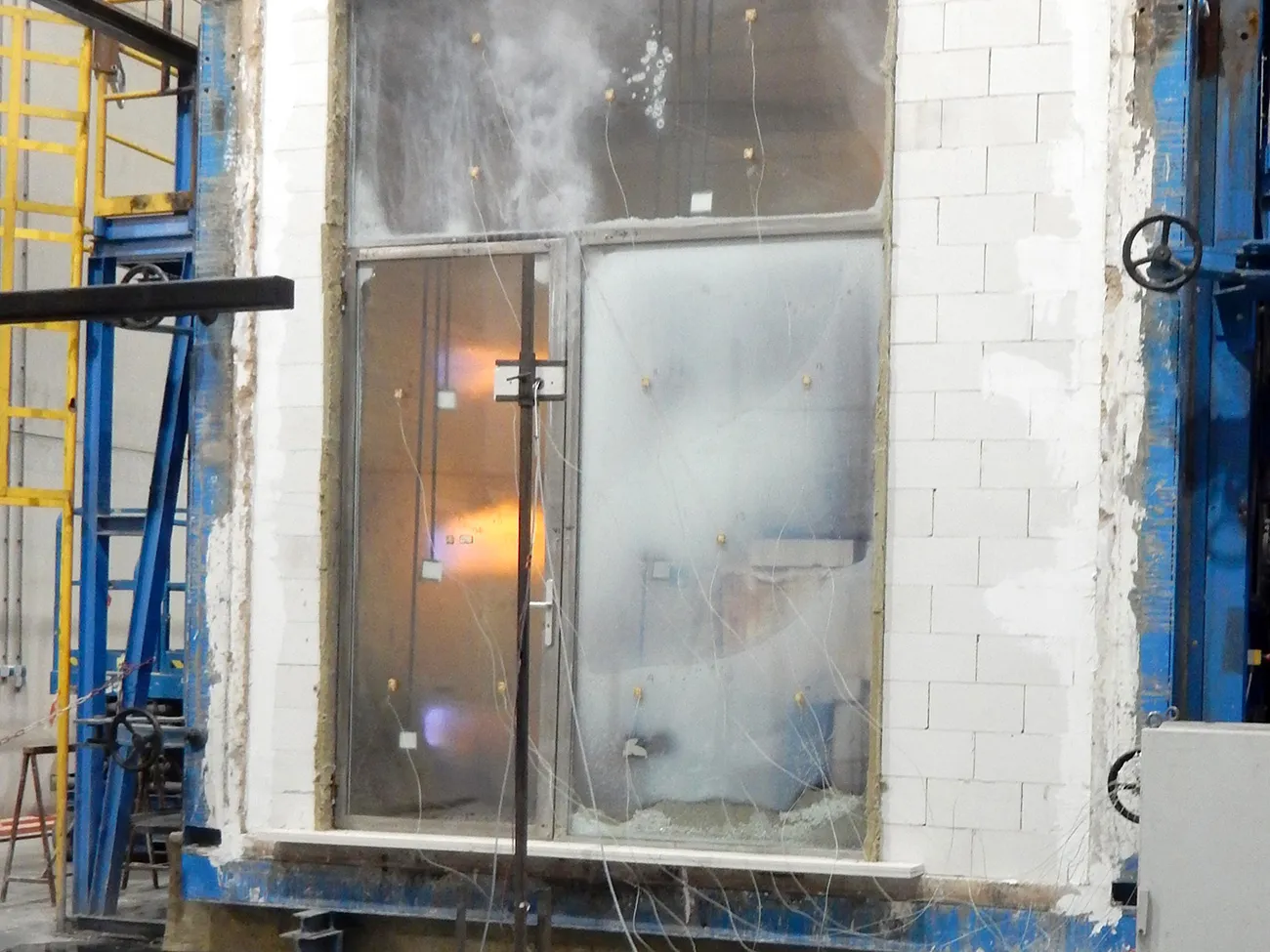
The façade industry will probably remember the date 1 November 2019. It marked the end of the transition period for EN 16034, the harmonised product standard that made CE marking mandatory for fire- and smoke-resistant windows and doors. In recent years, SKG-IKOB, as a certification body and Notified Body for this standard, has seen many façade contractors embrace this requirement and obtain certification. This means their products can be placed on the market with CE marking, meeting the requirements of European legislation (CPR). However, the requirement does not yet apply to steel internal doors. CE marking is nevertheless possible for these products via an alternative route.
The requirements underpinning CE marking and the issuing of Declarations of Performance (DoPs) for fire- and/or smoke-resistant windows and doors are set out in EN 16034. The standard is material-independent and applies to all fire- and/or smoke-resistant products intended for use in fire and/or smoke compartmentation and/or escape routes in external façades. As its scope is fairly broad, the standard gives examples of products covered, including windows, doors, shutters, industrial and garage doors, roller shutters and rolling screens.
Harmonised standards
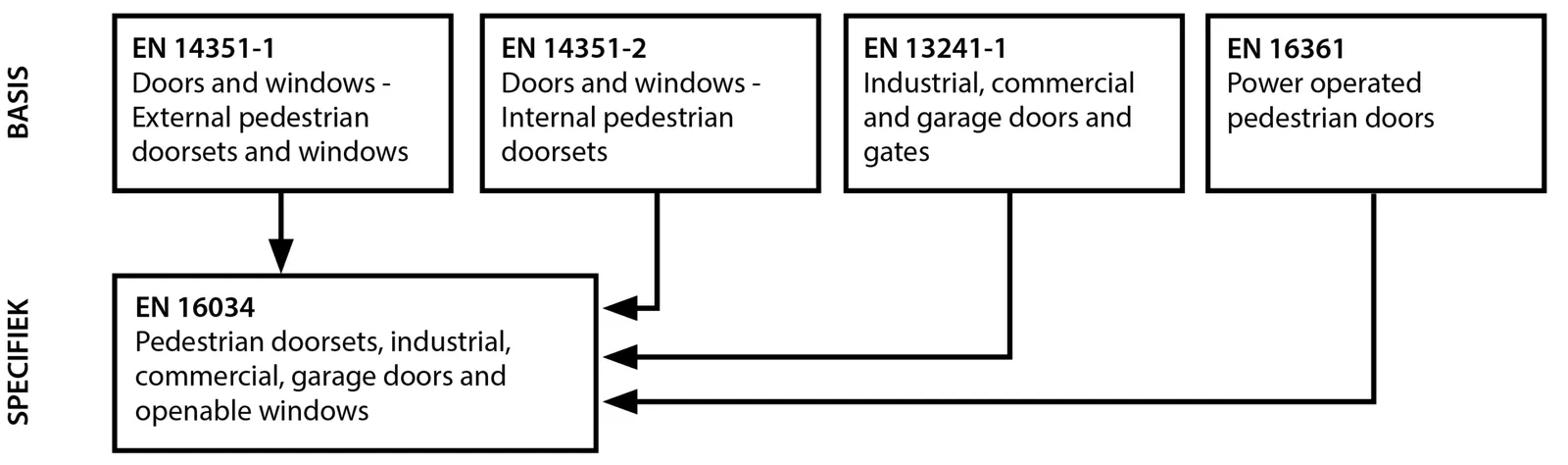
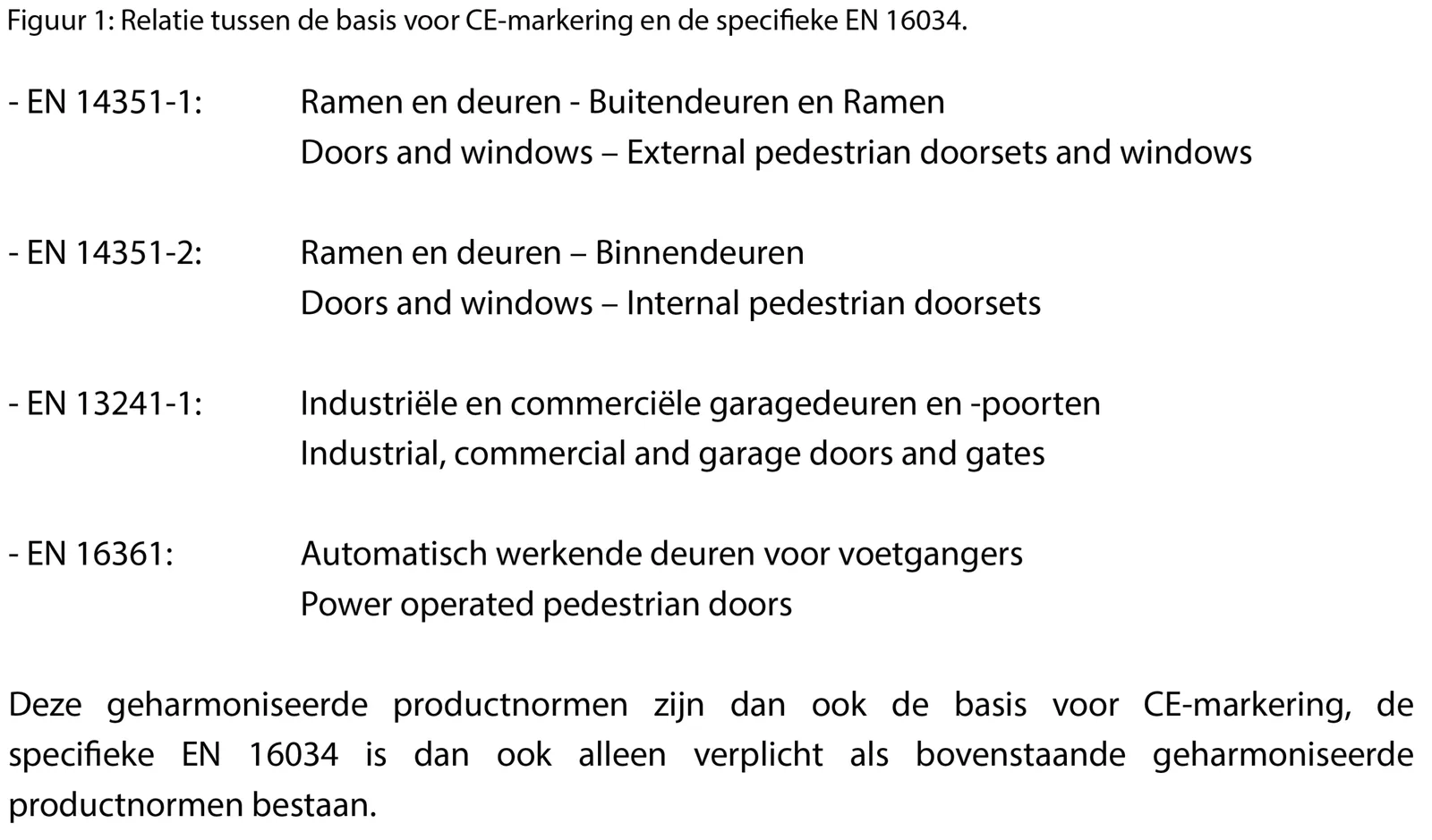
The product characteristics that manufacturers must declare in a Declaration of Performance (DoP) under EN 16034 relate to the product’s fire and/or smoke resistance. Declaration of the product’s basic characteristics, such as watertightness, air permeability and sound insulation, is governed by harmonised standards with a narrower scope. For products covered by EN 16034, these are the following standards:
As shown in Figure 1, CE marking for fire- and smoke-resistant internal doors under EN 16034 is permitted only if a harmonised product standard exists and has been designated by the EU for the product’s basic characteristics. The relevant standard is EN 14351-2. This standard was published in its final form by the European Committee for Standardization (CEN) in 2018, but has not yet been designated by the EU as a harmonised product standard. This means that manufacturers of internal doors, whether or not they have fire- and smoke-resistant properties, are not permitted to place products on the market with CE marking in accordance with these standards.
Alternative route to CE marking
The legal requirement for CE marking is laid down in the Construction Products Regulation (CPR). It states that CE marking is mandatory and permitted only if a harmonised product standard has been published for the product in question and designated by the EU. Harmonised product standards are developed by CEN, a time-consuming and costly process that is generally initiated only for products from sizeable industries.
For this reason, an alternative route has been created for niche products, making it possible to apply CE marking. This route is through EOTA rather than CEN. In this case, a European Assessment Document (EAD) can be drawn up for the product. An EAD can be compared with a harmonised product standard and sets out all the assessment criteria that must be met before products can be placed on the market with CE marking. One major difference from a harmonised standard is that publication of an EAD does not make CE marking mandatory, but provides the voluntary option of placing products on the market with CE marking. Apparently because of the long time taken to designate EN 14351-2 as a harmonised product standard for internal doors, an initiative was launched in Europe to enable CE marking of steel fire- and smoke-resistant internal doors via the alternative route. EAD 020062-00-1102 was published for this purpose in 2021.
SKG-IKOB accredited for CE marking of steel internal doors
The scope of this EAD is essentially “Internal fire resisting and/or smoke control single and double leaf doorsets made of special steel-frame profiles”. As usual, the EAD provides a detailed description of the types of products to which it can be applied and sets out the performance characteristics and associated test and classification methods that can be stated on the CE marking and Declaration of Performance (DoP). It also specifies the requirements for the manufacturer’s Factory Production Control (FPC). These requirements are exactly the same as those for Factory Production Control (FPC) under EN 16034.
If a manufacturer wishes to place its products on the market with CE marking, a European Technical Assessment (ETA) must first be drawn up on the basis of available test and classification reports for the characteristics to be declared. The certificate can be issued following a positive assessment of the manufacturer’s Factory Production Control.
To serve the market, SKG-IKOB has obtained designation as a Technical Assessment Body and accreditation as a Notified Body, enabling it to carry out both ETA preparation and FPC system certification. In this way, SKG-IKOB continues to develop its services for manufacturers of steel fire- and/or smoke-resistant windows and doors.
Question about this story? Ask your question
Keep following this
Get an email when a new story is published. No account needed.
- ThemeSafe and verifiable facade construction
- SubjectVMRG







