








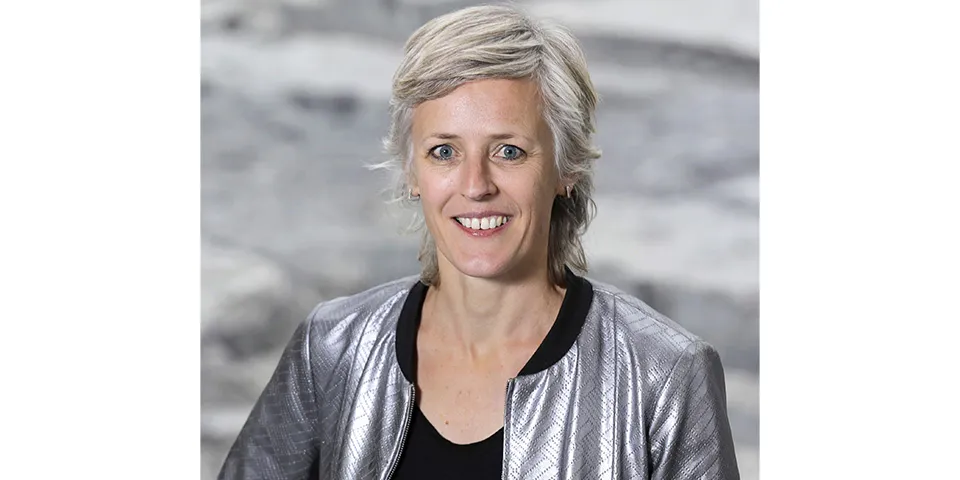
Circular Inspirations | Willemijn van der Werf, Business Developer, Circular Economy, TNO
Residual value
During my childhood, the reuse of materials was instilled in me from an early age. We composted our organic waste, my mother was a regular customer at the local second-hand shop and, for more than three decades, she organised a popular second-hand clothes fair every spring and autumn. I knew no other way than for things to be repaired and reused. This really sowed the seeds of my passion for treating materials with care, and I am a big fan of marktplaats.
It was only through my work that I became aware that an office or home is much more than a single building: as Stewart Brand says, it consists of six layers. These layers have different lifespans, and the elements, products and building materials from each of them could be reused after their first life. That could be possible… but there needs to be a sound business case and revenue model. The quality must also be good, and all relevant laws and regulations must be met.
To make this tangible, I worked with some very enthusiastic colleagues at TNO and C2C ExpoLAB to help develop a method for calculating the range of financial residual value for building products. Developing a tool and establishing the underlying principle, that a product’s residual value fluctuates between the residual value of its raw materials and the value of the original product minus costs including dismantling, maintenance, logistics and repairs, was the first step. Validating this methodology in case studies with five companies in the façade sector is step two. We will start on 1 July this year. At the same time, we want to build a community and get a movement under way, bringing together organisations that are working on this, just as we are. We know that a great deal needs to change in the construction and financial sectors before this financial value can actually be realised.
Reuse really is possible in many cases and makes a substantial contribution to reducing the environmental impact of construction. We just need to be willing to go the extra mile. And the quality and price need to be right. That was true at my mother’s clothes fair, and it is still true today. In that respect, not all that much has changed.
In Circular Inspirations, a guest columnist shares their views on circularity.
Question about this story? Ask your question
Keep following this
Get an email when a new story is published. No account needed.
- ThemeCircular facades with lower environmental impact
- SubjectVMRG







