








Environmental agreements for the façade industry
New NTA 8233 Circular façades (frames, windows, doors and curtain walling)
The new NTA Circular façades (Netherlands Technical Agreement) was launched at the ‘Circular Façade Economy’ symposium on 9 June. For the first time, it brings together innovations and knowledge gained on circular windows, doors and curtain walling, and their components. This NTA is an initiative of Stichting Circulaire Geveleconomie and NEN, as part of the Future-Proof Built Environment programme.
NTA 8233:2026 Circular façades will play an important role in scaling up circular practices and take-back systems across the façade industry. Trade associations and companies involved in the design, manufacture, maintenance and sustainable demolition or dismantling of metal, timber and PVC windows, doors and curtain walling, including flat glass, ironmongery and thresholds, worked closely together to develop the NTA. This means the façade industry is represented across the board, with broad-based support for the agreement. An NTA was found to be the most suitable type of document for this subject, given its innovative nature.
Circular strategies
In recent years, a wealth of theoretical and practical knowledge has been gained on how to improve the circularity of windows, doors and curtain walling. This NTA sets out that knowledge, with the aim of retaining material stocks, reducing environmental impact and preserving existing value.
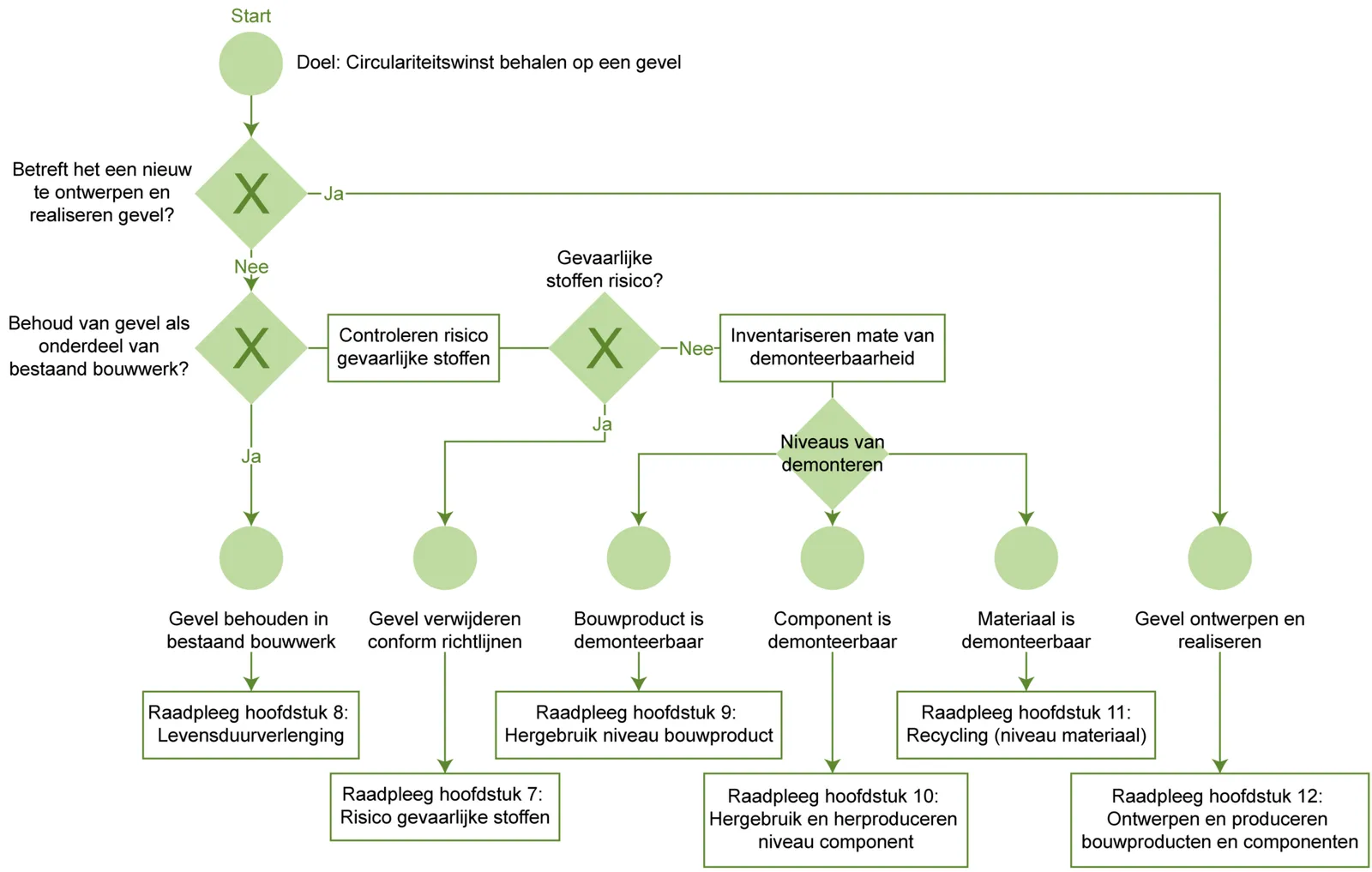
The NTA sets out four circular strategies and explains which one can be used in each situation. The requirements and conditions for each strategy are described:
Extending service life
This section of the NTA sets out requirements for extending the technical service life of a building product in an existing building. The service life of building products depends, among other things, on soiling, degradation and damage, and can be extended through regular maintenance, repairs, component replacement and upgrades.
Reuse
This involves reusing an existing building product or component in the same application. It sets out requirements for reuse and remanufacturing using products from existing buildings. Cleaning and repair are permitted, provided the original performance of the building product does not change. It also covers ‘remanufacturing’, in which the building product is used again but its original performance changes.
Recycling
This involves reusing the material that makes up a building product or component, after processing, to make new components and building products. This applies both to material recovered from existing buildings after demolition or replacement, and to production waste.
Design and manufacture
This section of the NTA sets out requirements for the (new) design, manufacture and/or placing on the market of building products or components, such as a window frame, door or curtain wall, flat glass, or ironmongery. This applies to use in existing or new buildings. Among other things, it supports circular design, commissioning, manufacture and maintenance. The NTA provides assessment methods but does not set threshold values. It gives clients a basis for setting requirements and enables parties placing building products and components on the market to demonstrate their circular performance.
Developments
The decomposition and list of terms and definitions included in the NTA anticipate new developments and align with the current European Construction Products Regulation (CPR). It also provides guidance on risks posed by hazardous substances. In addition, the NTA includes an extensive informative annex presenting the latest insights into circular design.
In short, the NTA sets requirements both for circular strategies for building products and components from existing buildings, and for primary or secondary building products and components that are placed on the market again and used in new or existing buildings.
Available free of charge
As the NTA Circular façades was developed with funding from the Future-Proof Built Environment programme, NEN is making it publicly available. Circular Façade Economy refers to this NTA in its standards.
You can consult the NTA Circular façades free of charge through NEN. The standards menu on the www.circulairegeveleconomie.nl website takes you directly to the relevant digital resource at NEN.

The real gains from circularity
What are we actually doing this for, this NTA Circular façades?
With current global developments, pressure on energy and raw materials is growing. The construction sector is the largest consumer of primary raw materials and the second-largest consumer of critical materials. This is no longer just a question of climate and circularity. Strategic autonomy and economic resilience are becoming increasingly important, as are the ability and agility of companies to remain competitive. The same applies to the façade industry, an important contributor to housebuilding and the renovation of the existing building stock.
This aligns with circularity targets set at European and national level. In addition, through Stichting Circulaire Geveleconomie, the façade sector has also made agreements with the Dutch government to reduce CO2 emissions and close the loop for these building products as far as possible.
A collective effort
The initiative for the NTA Circular façades also came from Stichting Circulaire Geveleconomie. Monique Fledderman, director of Circulaire Geveleconomie: “Given all the developments, Circular Façade Economy sees only one way forward: moving ahead. Circularity is not only good for future generations, it is just as important for our business in the near future. Since this affects the entire façade industry, we decided to tackle it collectively. We can achieve far more together than on our own. The NTA Circular façades is one example. It is intended to give companies an overview and support them.”
Across the façade industry
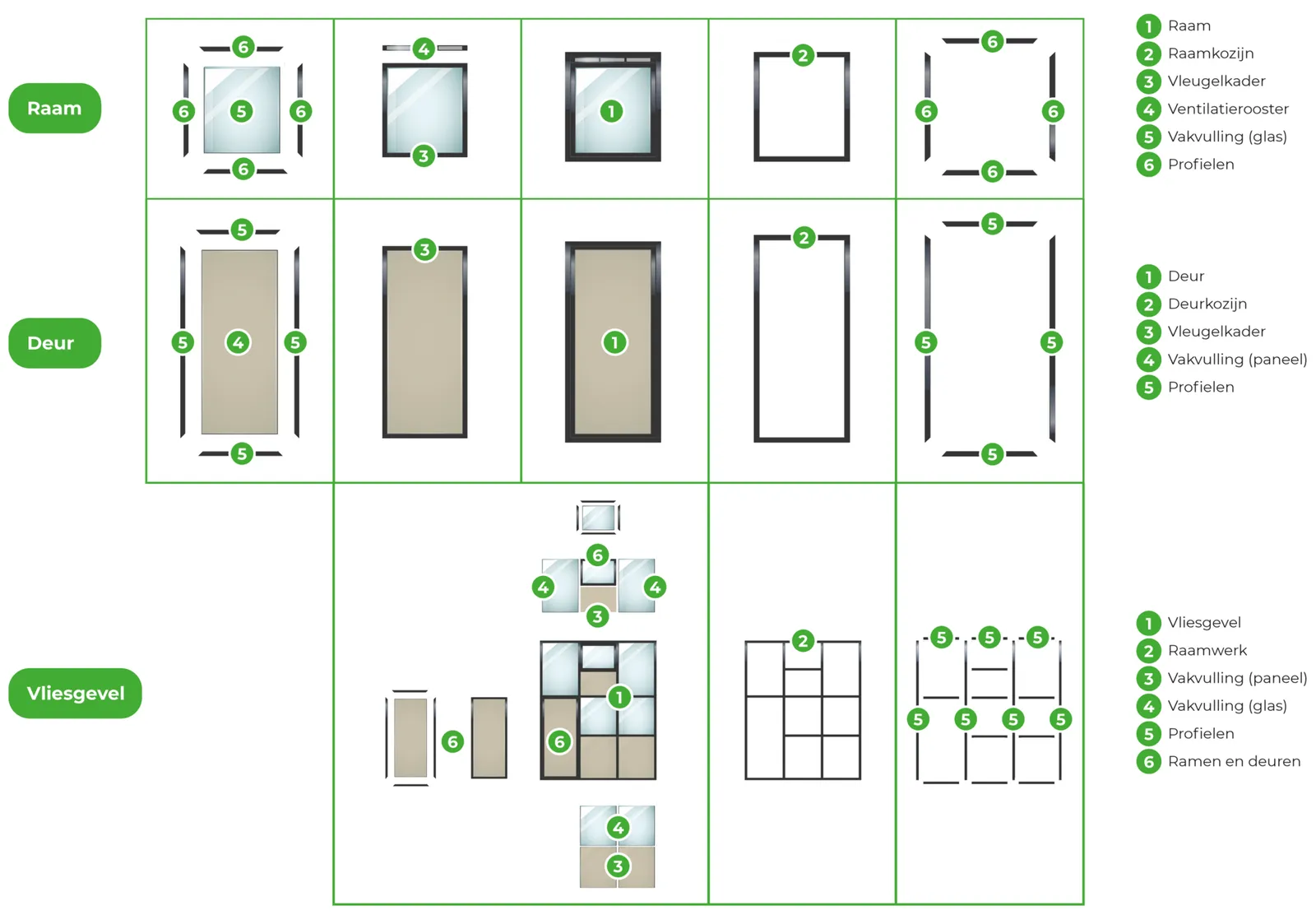
“Parties had until the end of July 2025 to register their interest in contributing to the new NTA,” Fledderman continues. “From then on, all parties worked extremely hard together to develop it. The NTA is divided into several chapters, which can be used on a modular basis. This means companies can meet the requirements of one or more chapters of the NTA, so compliance with the entire NTA is not necessary. For example, a company may perform very well on reuse without having to meet all the requirements in the recycling chapter. The application of the NTA is also straightforward. Figure 1 is included in the NTA and clearly shows which façade components it applies to. The circular strategies are clearly described, enabling every company to make appropriate choices.”
For companies, by companies
The NTA is therefore for companies and developed by companies. “This is version 1.0, but given all the developments underway, there will certainly be a follow-up,” says Fledderman. “It was a very challenging process, with many parties from across the façade industry’s trade associations working extremely hard on it. This is one reason why we expect the NTA to have broad support. It gives companies a real opportunity to show what they can do.”
The strong interest in the NTA is already evident from responses from other countries. Fledderman laughs: “Yes, we’ve already had a request from Sweden for a translation!”
Question about this story? Ask your question
Keep following this
Get an email when a new story is published. No account needed.
- ThemeFacade design and construction
- SubjectVMRG







