








In situ testing of façade air and water tightness
Airtight construction is clearly a growing trend. Government targets for reducing energy consumption are becoming increasingly ambitious, and the associated requirements are becoming ever more stringent. With today’s façade systems, production techniques and quality controls, there is no doubt that the façade industry can meet these requirements. However, as the requirements become more stringent, it is important that windows, doors and façade elements are manufactured and installed with great care. Sometimes the smallest details can determine whether requirements are met. Production or installation defects, for example, can lead to excessive air leakage or water ingress in practice.
It is often agreed contractually that an in situ air or water tightness test must be carried out before a building is handed over. SKG-IKOB has several test methods available for carrying out these in situ measurements.
Blower door testing
Air leakage through a façade is, of course, permissible, provided the applicable standards are not exceeded. In a standard blower door test, a building or room is subjected to relatively low positive or negative pressure, making it possible to locate the areas of greatest air leakage in windows, doors or façade elements. The air leakage rate at a pressure difference of 10 or 50 Pa can also be estimated. These tests can help improve the air tightness of the façade.
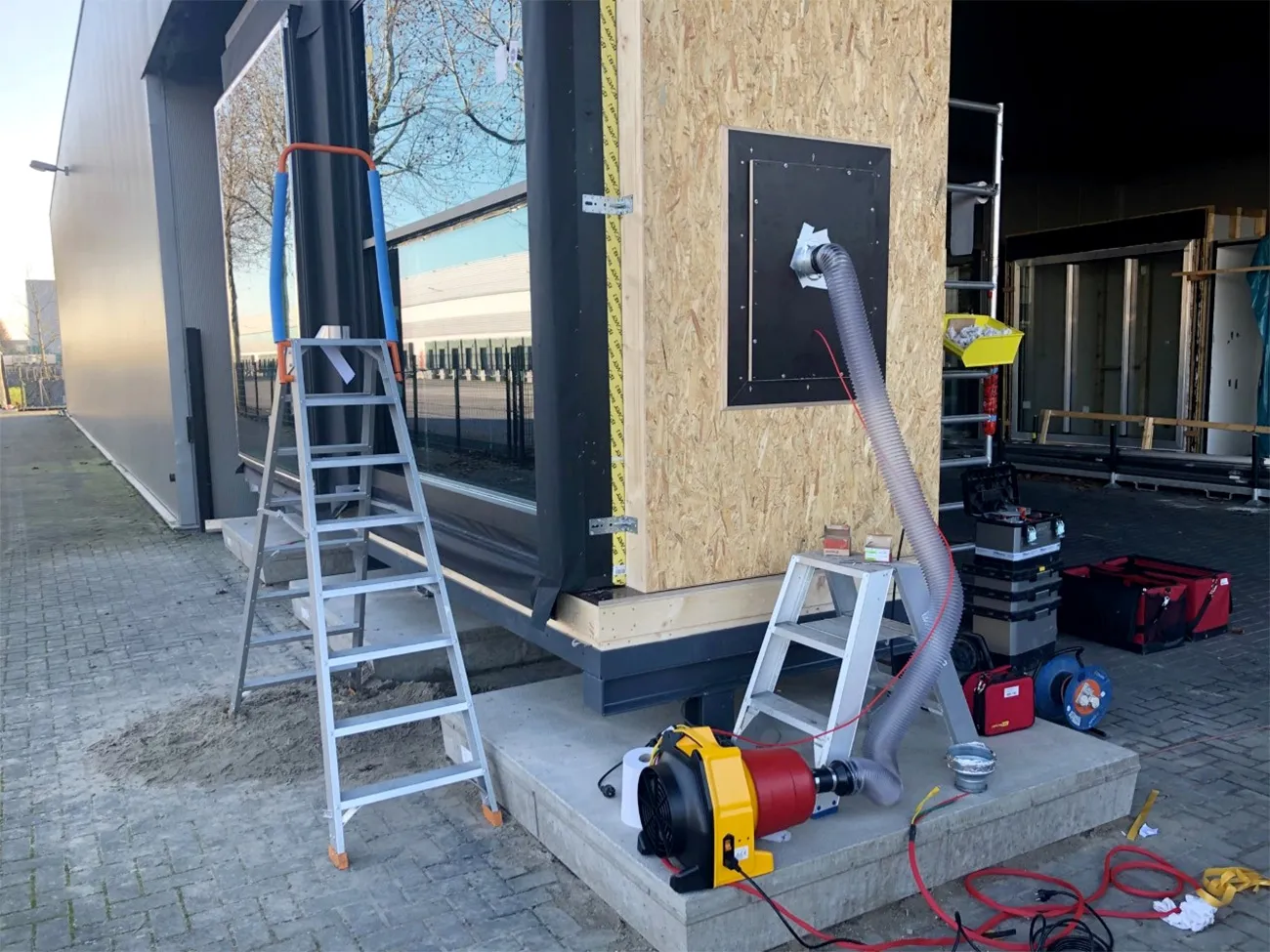
To carry out a more representative test, SKG-IKOB has recently acquired powerful blower door equipment (Photo 1) that can create greater pressure differences between the inside and outside, making it possible to assess more accurately whether the façade’s air and water tightness meets the requirements for its application, taking into account factors such as position, height and building location.
Hose test
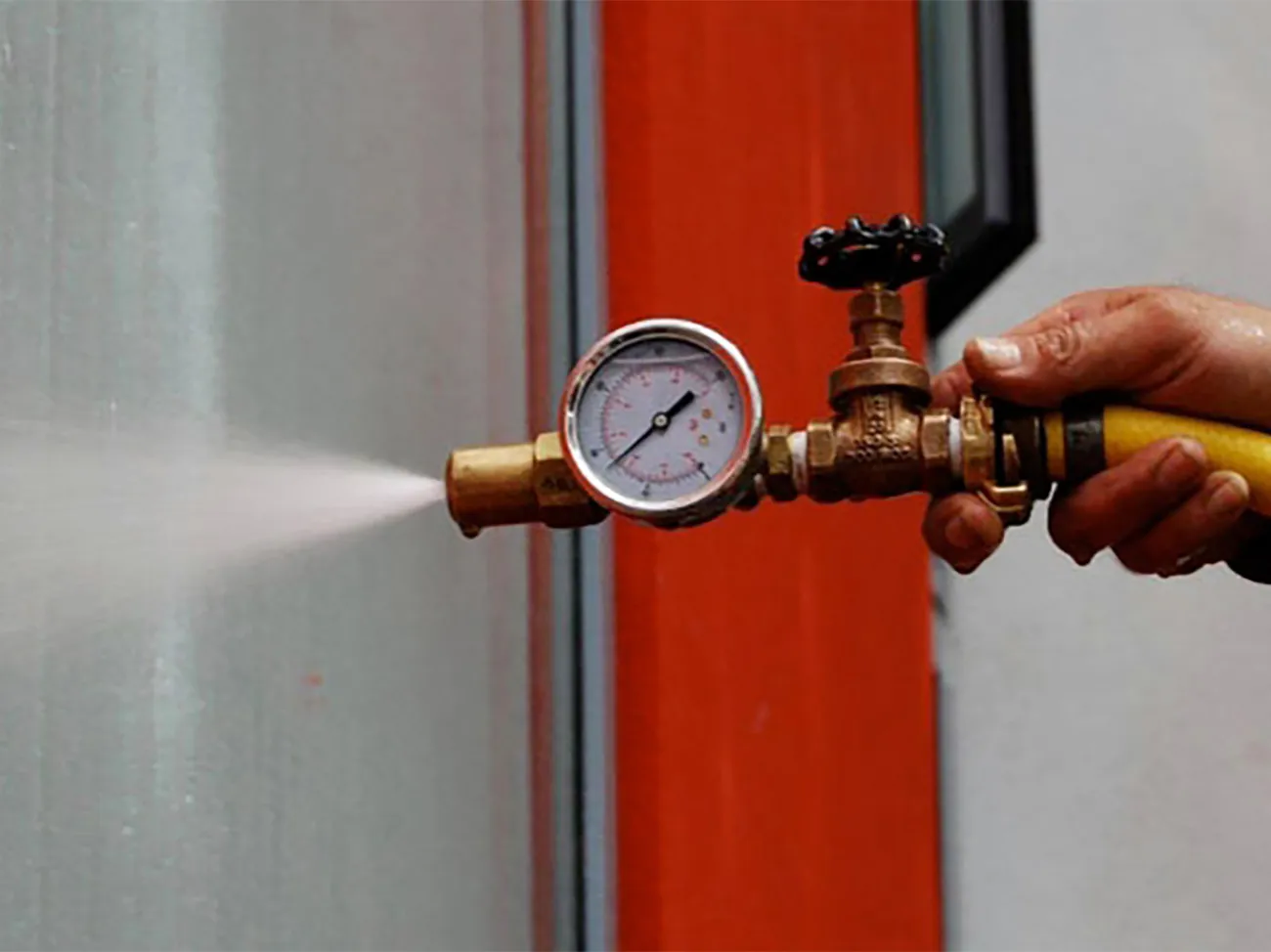
In the UK, on-site hose testing is often specified in accordance with CWCT guidance, Section 9 and Technical Note No. 41. The test uses a water jet from a nozzle at constant pressure and flow rate to assess the water tightness of joints in curtain walls and unitised façades after installation. The water jet is moved over the joints at a constant angle and at a fixed distance (Photo 2). The aim is to ensure that manufacture and installation have not in any way reduced the system’s performance, and to check the performance of interfaces that were not included in a standard laboratory test.
Mobile facilities for on-site testing
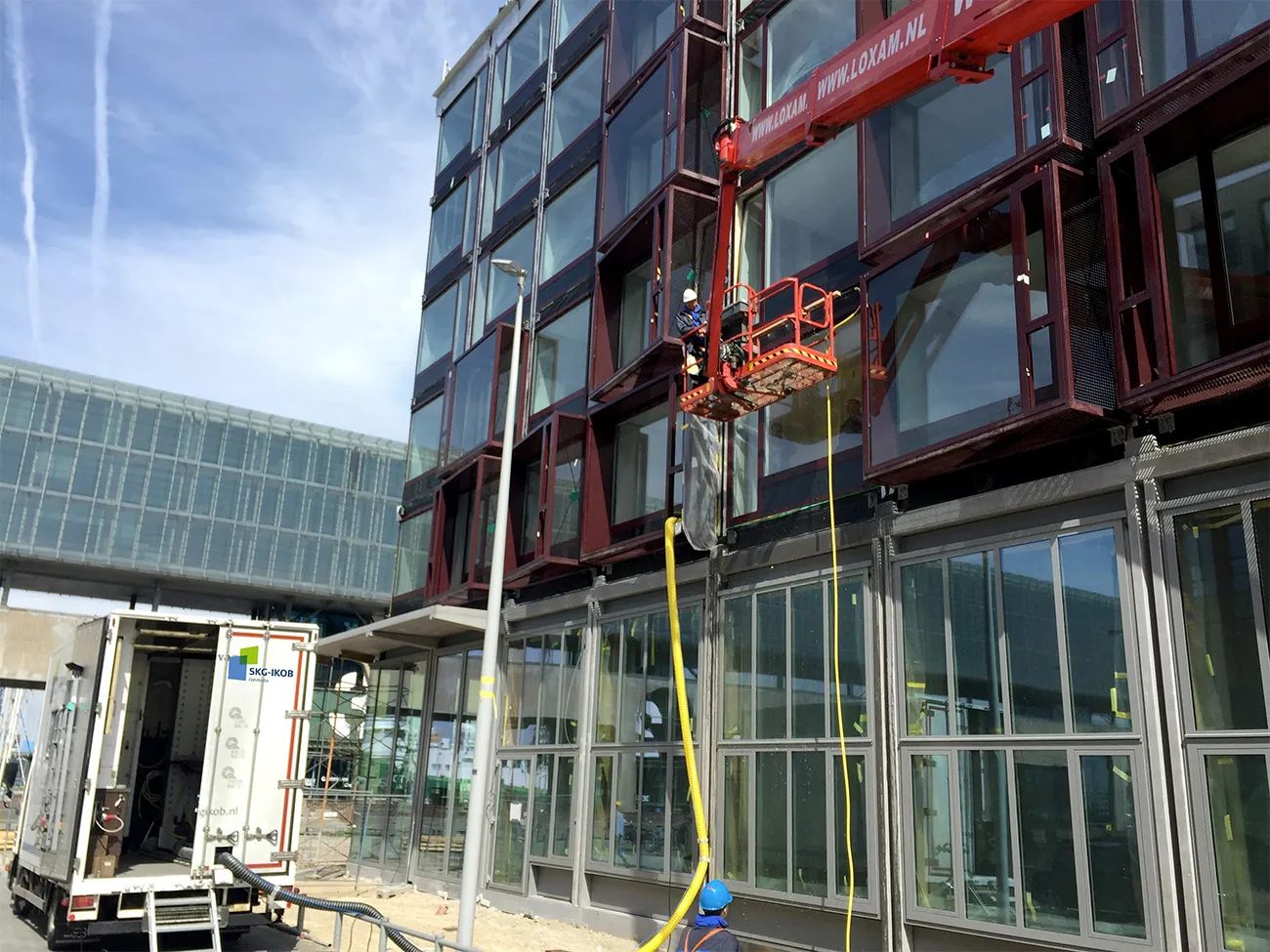
SKG-IKOB has mobile test facilities (Photo 3) for carrying out quantitative measurements of the air and water tightness of windows, doors and façade elements. These allow air and water tightness tests to be carried out on site, both on construction sites and in completed buildings.
An airtight wooden test chamber is built against the inside of the façade and connected to the equipment to create negative pressure across the façade. Depending on how the chamber is installed, the interfaces with the building frame can also be included in the test. Water tightness is assessed at the same time using a spray rig on the outside.
The tests are carried out using the methods described in EN 1026/ EN 12153 (air permeability of windows and doors/curtain walls) and EN 1027/ EN 12155 (watertightness of windows and doors/curtain walls). These are also used by the façade industry to determine the performance achievable with the various profile systems, so the results are directly comparable. This makes it possible to establish whether the façade elements meet the specified requirements and the performance achievable with the façade system.
Independent
SKG-IKOB carries out these tests using the staff and resources of its accredited testing laboratory, guaranteeing and safeguarding independence and impartiality across the various tests. Through continuous development, SKG-IKOB continues to lead the field among testing and certification bodies.
SKG-IKOB has more than 50 years’ experience as a testing and inspection body for construction and safety products. It was founded by the industry itself to ensure the performance and safety of products and services for the construction and property sectors in a sustainable, independent and impartial way.
Question about this story? Ask your question
Keep following this
Get an email when a new story is published. No account needed.
- ThemeAn energy-efficient and comfortable building envelope
- SubjectVMRG







