








Solar shading and climate adaptation: a necessity in a warming Netherlands
Image Duco Ventilation & Sun Control
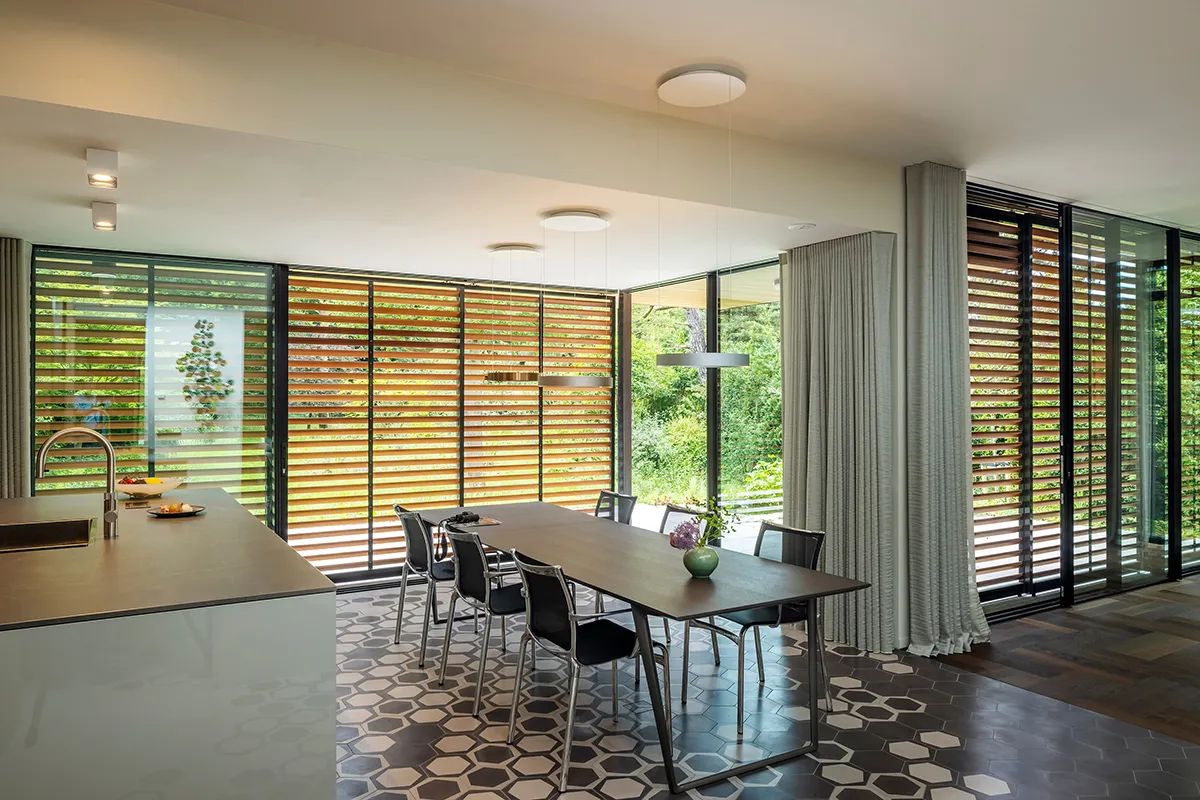
Summers are getting warmer, nights more oppressive and the climate more erratic. Buildings are increasingly at risk of overheating. Current standards and regulations do not yet adequately address this. Against this backdrop, solar shading is becoming more important as a passive measure for keeping indoor conditions under control. Yet in practice, solar shading is still often overlooked.
According to the KNMI’s various climate scenarios from 2023, outdoor temperatures in the Netherlands will rise significantly, particularly during the summer months. This warming will lead to higher temperatures not only during the day, but also at night. This increases the risk of overheating in buildings, particularly homes.
Climate change calls for adaptation
Current standards, such as NEN 5060, are based on historical climate data. As a result, they underestimate future conditions. The climate scenarios for 2033 and 2050 show that hot summers will occur much more frequently and will be more intense.
One of the most concerning findings of the study is the rise in night-time temperatures. Tropical nights, when the temperature does not fall below 20°C, are becoming increasingly common. This has a direct impact on residents’ sleep quality and health.
Solar shading as an effective measure
In practice, solar shading has proved particularly effective at limiting overheating. It prevents solar radiation from entering the building, reducing the need for active cooling or even eliminating it altogether. This places solar shading high on the ‘cooling hierarchy’: prevention is better than cure. Yet solar shading is still not routinely included in many designs. This is partly because current calculation methods used in energy performance assessments, such as BENG, do not give sufficient credit to the benefits of solar shading. In practice, we see this assessment method being used as a design tool.
A future-proof assessment method
From 2030, the Netherlands will move to a future-proof method for assessing energy performance. This new assessment method will align with EPBD IV and is likely to be based on an hourly calculation engine. The current NTA8800 uses a monthly average method, which does not allow cooling demand to be assessed accurately. The new assessment method will also use a more future-proof climate year. The advisory committee has recommended applying the 2033 climate scenario.
Hourly calculations will allow dynamic products, such as solar shading, to be assessed more accurately. The indicators calculated will also better reflect the building’s actual performance. To ensure solar shading is properly accounted for, it is also essential to divide the building into multiple zones. Each room has its own use, heat generation and requirements relating to overheating.
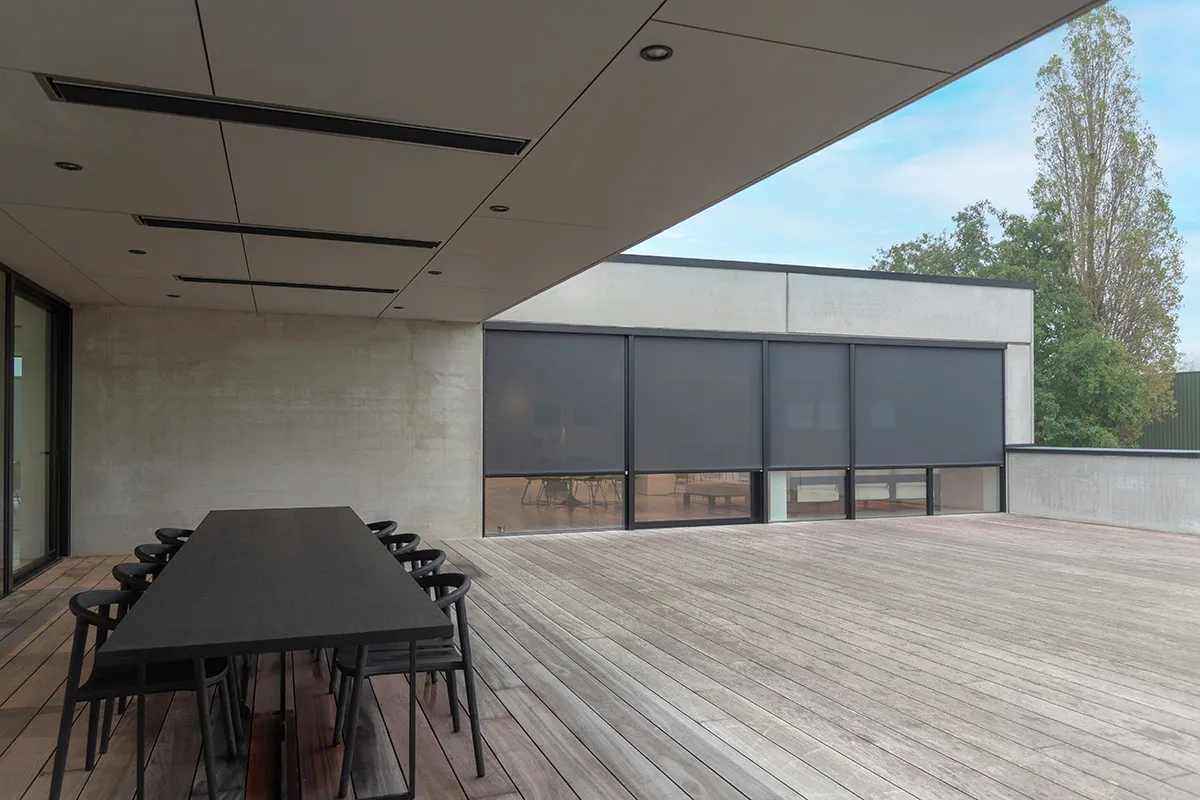
Regulations and environmental performance
Alongside energy performance, environmental performance is also playing an increasingly important role. In the Netherlands, the Besluit bouwwerken leefomgeving (Bbl) sets a requirement for the environmental performance of buildings (MPG). This is calculated using the environmental cost indicator (MKI), which is in turn based on a life cycle assessment (LCA) of the materials used. For solar shading, this means that an Environmental Product Declaration (EPD) must be prepared. VMRG is working on a dedicated Product Category Rules (PCR) for solar shading to ensure these calculations can be carried out consistently and align with Dutch regulations.
Solar shading contributes not only to comfort, but also to sustainability. It does not cool a building, but reduces heat gains. This reduces cooling demand, which has a positive effect on energy performance.
Balancing energy and the environment
The European directive EPBD IV (Energy Performance of Buildings Directive) introduces the concept of ‘whole life cycle’: the total CO2 emissions over a building’s entire life cycle, including materials and operational energy use. This requires designers to look beyond energy performance alone. A building’s energy performance over its lifetime must be weighed against its environmental performance. Only then can we make informed choices.
There is still considerable scope for improvement in the solar shading sector, particularly in terms of circularity. Aluminium, for example, is often collected without knowing where the material will end up. It would be better to recycle aluminium within the sector itself, so that its value is retained in the supply chain.
The combination of climate change, stricter regulations and growing attention to health and comfort makes solar shading a strategic façade product. It helps limit overheating, reduces energy demand and can also improve environmental performance. Solar shading is a necessary measure in the face of the future.
To realise this potential in full, collaboration across the supply chain is essential. The façade construction sector faces the challenge of incorporating solar shading holistically into design, calculation and installation. Only then can we create buildings that are resilient to tomorrow’s climate.
Question about this story? Ask your question
Keep following this
Get an email when a new story is published. No account needed.
- ThemeAn energy-efficient and comfortable building envelope
- SubjectVMRG







