








The Insulation Test Chamber for reliable insulation choices
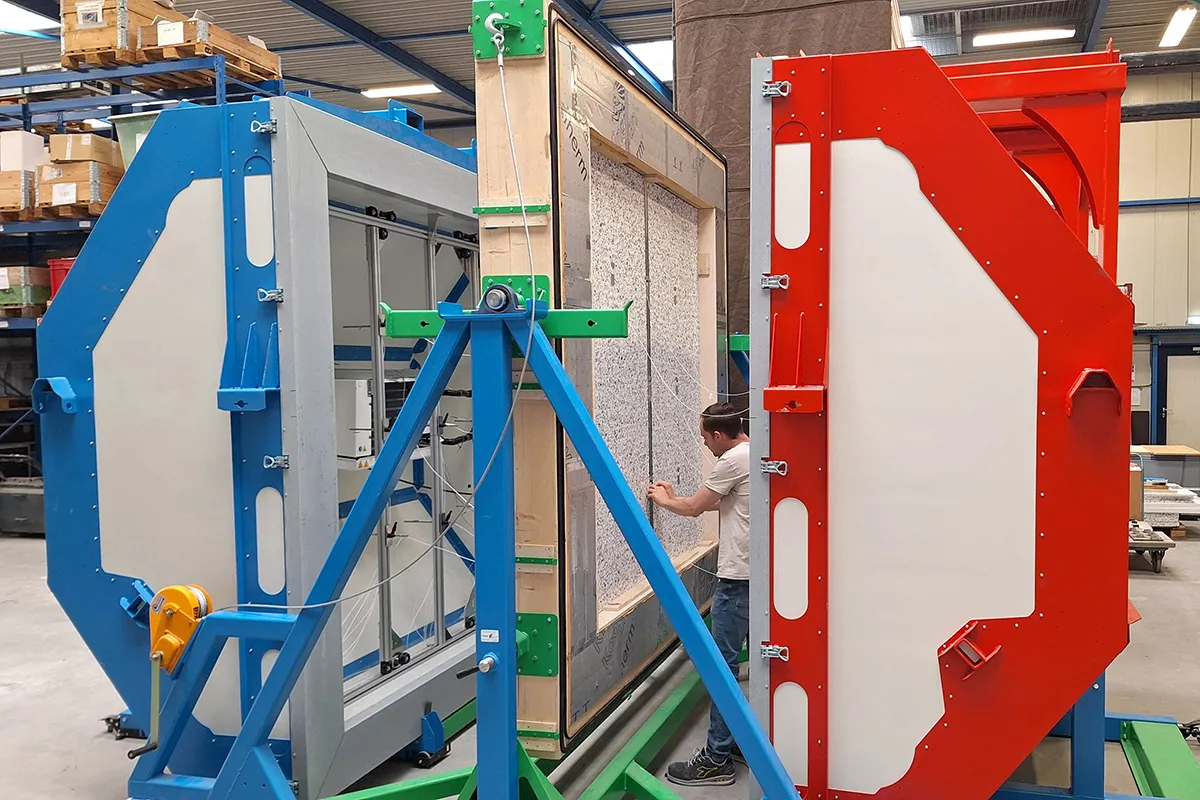
SKG-IKOB develops KELVIN
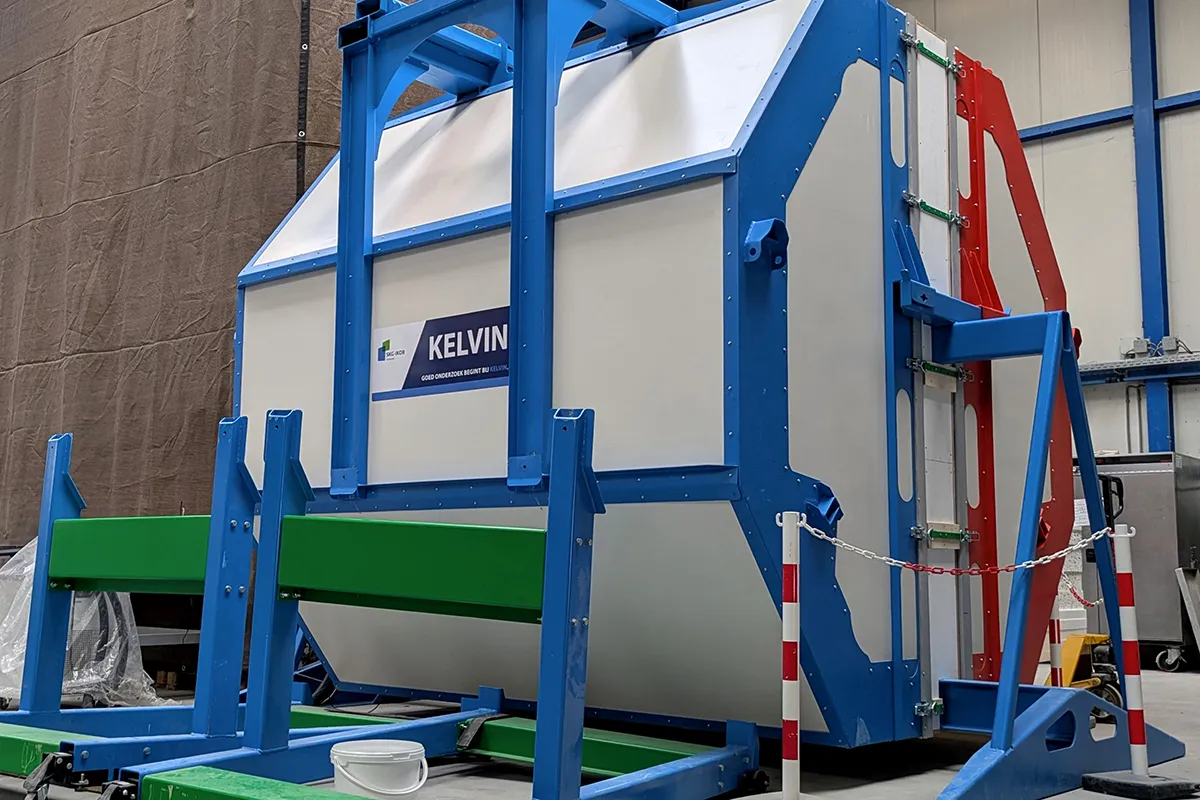
Over the coming decades, the Netherlands faces a huge challenge to make its buildings more sustainable. Insulating homes plays a key role. But which materials and methods really deliver results? The market offers countless solutions, each with its own promises. To put those promises to the test and provide reliable information, SKG-IKOB, in collaboration with Vereniging Eigen Huis, has developed the Insulation Test Chamber, known internally as KELVIN.
As an independent certification and testing organisation, SKG-IKOB has played a central role for decades in assessing the quality and performance of façades, construction products and insulation materials, as well as the installation of insulation. With the development of KELVIN, SKG-IKOB is extending this role by objectively measuring the thermal performance of construction products and insulation materials in real-world conditions. This enables a fair comparison between different products and systems, such as window frames, façade panels, cavity wall insulation and floor insulation, while ensuring end users can rely on their performance.
Realistic simulation
Until now, materials have been tested in the laboratory using small samples measuring 30 x 30 centimetres. These tests use material applied evenly. The measured heat transfer is used to determine a theoretical insulation value (lambda value). In buildings, materials are used in all kinds of constructions. They are combined with other building materials and installed in different positions, such as vertically in a façade, at an angle on a roof or horizontally in a floor. These differences in real-world conditions, including natural air movement (convection) and the angle of inclination, affect how well a material ultimately insulates. Realistically simulating these conditions requires more than laboratory testing alone.
Advanced test rig
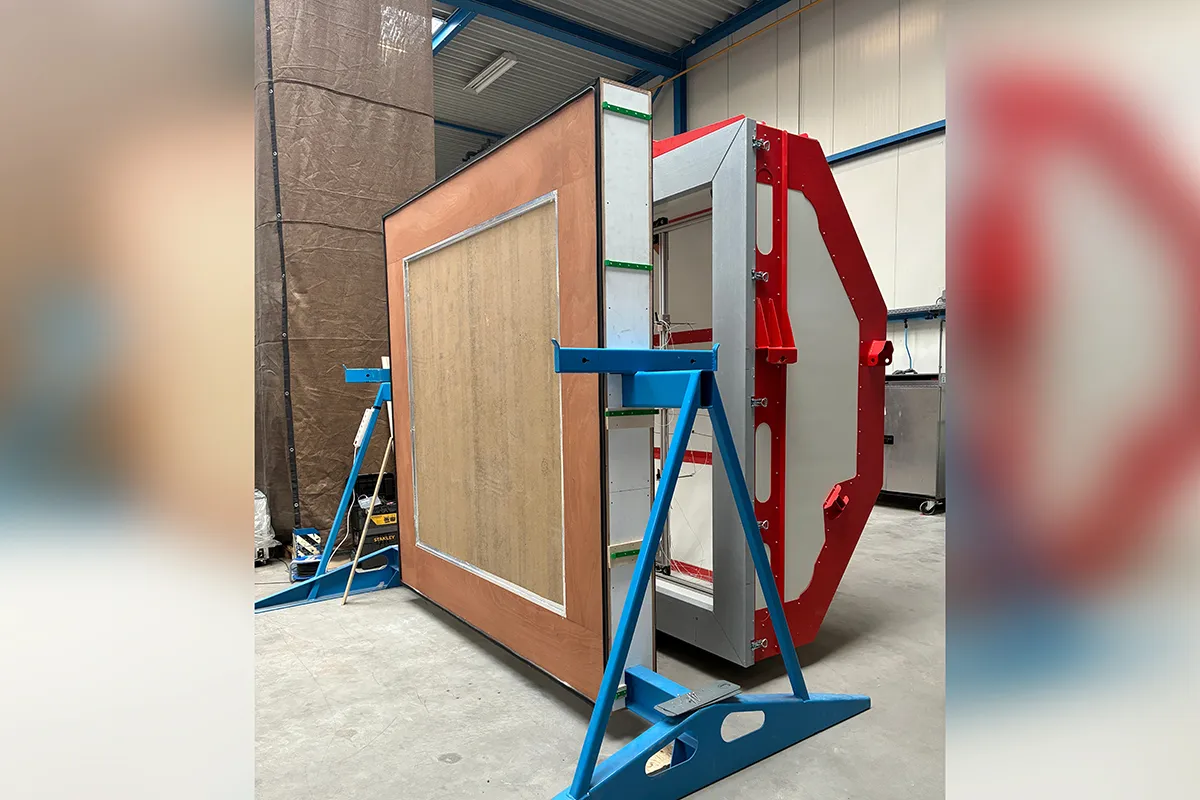
The Insulation Test Chamber, also known as a ‘hot box’ in accordance with standard NEN-EN-ISO 8990, is an advanced test rig that can assess complete building elements and construction products measuring up to 2.0 x 2.0 metres. Examples include a timber floor insulated with PUR foam, a window frame fitted with a panel or glazing, a cavity wall with mineral wool, or insulated façade panels. Under controlled conditions, the test rig shows how well an element retains heat, and therefore how energy-efficient it is in practice. The test is carried out on the complete assembly, not on individual materials, just as it would be incorporated into a building.
Testing in real-world conditions
KELVIN has a unique tilting mechanism, allowing the test object to be measured vertically, horizontally or at an angle. This makes it possible to determine the properties of building elements and construction products in the positions in which they are used in practice: in the façade, roof or floor.
It consists of two test chambers, one warm and one cold. A test frame between them holds the test object. A temperature difference of 20 degrees is created, similar to the difference between indoor and outdoor conditions on a cold day.
This determines the actual insulating performance of the test object, including all building materials, joints and fixings.
Detailed, evidence-based data Heat transfer through a brick wall or a window assembly is determined by its U-value. The lower the U-value, the lower the heat flow lost and the better the insulating properties of the building element. The U-value is therefore a measure of the energy efficiency of building envelope components such as composite walls, façades, windows and doors. KELVIN is designed not only to measure insulation values, but above all to provide practical insight. How does the build-up of a wall, with bricks, insulation and finishes, affect its thermal resistance? How does air circulate (convection) within different materials? Thanks to the practical measurements carried out in the Insulation Test Chamber, SKG-IKOB can provide clients and manufacturers with detailed, evidence-based data. This benefits policymakers and consumers.
Making sustainability promises measurable
The social relevance is significant. Climate change and rising energy costs are putting the construction sector under considerable pressure to become more sustainable. Homes are being retrofitted with established, traditional products, while an increasing number of bio-based and other innovative insulation materials and products with a lower environmental impact are entering the market. SKG-IKOB aims to test the actual performance of these innovative materials too, so that sustainability is not just a promise, but something that can be measurably delivered.
Question about this story? Ask your question
Keep following this
Get an email when a new story is published. No account needed.
- ThemeAn energy-efficient and comfortable building envelope
- SubjectVMRG







