








VMRG Column | Recycling, bottlenecks and new opportunities
Companies used to see their waste as a burden and recycling as an unwelcome obligation. That relationship is changing, as more and more companies see their waste as a source of revenue. In the metal industry, recycling does not so much create a new revenue stream as generate savings in the production process, because far less energy is required, with corresponding benefits for CO2 emissions.
Steel and aluminium can be recycled almost 100% without any loss of quality. Recycling steel and aluminium can deliver substantial environmental benefits, reducing CO2 emissions and energy consumption by up to 95%. These factors have a significant influence on the life cycle assessment (LCA). However, we should bear in mind that an LCA is a snapshot in time and can change over the years. For example, the availability of end-of-life aluminium and steel currently fails to keep pace with demand, meaning that “new” aluminium and steel are still being produced.
Companies active in the aluminium and steel industries are therefore increasingly facing shortages of these raw materials. How can businesses respond, and where will they source their raw materials in the future? For now, manufacturers do not need to switch to recycled aluminium to make an economic gain, as aluminium scrap has a high residual value because it is so easy to recycle. The benefits lie primarily in environmental gains, lower energy consumption and much lower CO2 emissions. As the use of recycled aluminium and steel is expected to increase in the future, the LCA of these materials is also expected to improve over time. We live in a dynamic world and construct buildings that last for many decades, but use “currently available” static data for the LCA. Only time will tell to what extent the data stated in these LCAs will remain valid.
One thing is certain: recycled metals, including aluminium and steel, will be used increasingly. This will have a positive impact on the environmental profile of these materials, as reflected in the LCA. The bottleneck is that, partly because aluminium and steel have long service lives, there is still too little end-of-life aluminium and steel available, meaning that “new” aluminium and steel continue to be produced. As a result, the circular loop is not yet closed. This is not because material leaves the loop in an uncontrolled way, but because there is too little material within it.
With the government aiming for the Dutch economy to be circular by 2050, the façade construction sector also faces a major sustainability challenge. This is why VMRG is actively contributing to the Circular Façade Economy, with the aim of reaching an integrated, inclusive system for façades through a chain agreement. Producer responsibility is central to a Circular Façade Economy. VMRG façade builders are therefore also actively involved.
The potential for a circular economy is significant, but getting the transition under way requires a sector-specific approach. VMRG is working on this alongside other sectors, developing shared producer responsibility, with circular façades creating new opportunities to raise climate ambitions to a higher level.
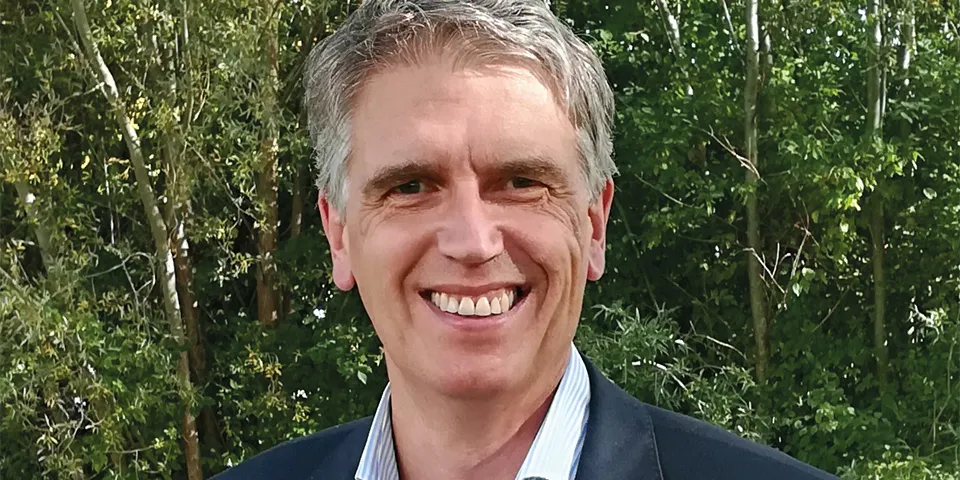
Hans Zwaanenburg, Director of VMRG.
Question about this story? Ask your question
Keep following this
Get an email when a new story is published. No account needed.
- ThemeCircular facades with lower environmental impact
- SubjectVMRG







